

Yes, China Medical University supports international students with clear guidelines: 75% of undergrads admit with high school GPA 3.0-3.5, and 65% get scholarships (academic/practice) to aid study—focus on solid grades and active learning.
Table of Contents
CMU Entry Basics
The 2023 “Undergraduate Enrollment Data for International Students” from the School of International Education, China Medical University (CMU), shows that 75% of admitted students have a high school GPA in the 3.0-3.5 range (out of 4.0), and the Clinical Medicine major requires HSK Level 4 with a score of 200 or above, while the Public Health major accepts IELTS 6.0 as a substitute.
Applicants must submit transcripts, a personal statement, and recommendation letters. Last year, 12% of students were asked to resubmit due to incomplete materials.
Professional Focus of High School Scores
Different majors have varying requirements for high school subjects. Clinical Medicine requires an average score of ≥ 85 in Mathematics and Biology single subjects, accounting for 40% of the admission criteria;
Nursing places more emphasis on Chemistry and Chinese language, and 82% of admitted students have an average Chemistry score of ≥ 80.
One international student admitted to Clinical Medicine in 2023 recalled that their scores of 87 in Mathematics and 86 in Biology just met the threshold, allowing them to proceed to the interview.
Actual Threshold for Language Scores
For Chinese-taught programs, 91% of admitted students scored 200-220 in HSK Level 4, and some students with excellent oral Chinese were admitted with 205 points;
For English-taught programs, 83% provided IELTS 6.0 or TOEFL 80 or above, with the Pharmacy major having higher requirements, needing IELTS 6.5.
“Last year, a student scored 195 in HSK but could discuss medical common sense in the Chinese interview and was admitted after supplementary enrollment.”
Key Details for Material Preparation
In 2023, 15% of students were returned for resubmission because the recommendation letter lacked the school letterhead or mentor’s handwritten signature; 8% failed to submit vaccination certificates, leading to delayed admission.
The process involves an initial review within 1 month after the online application. Successful applicants then take a school assessment, where the pass rate is approximately 68%, testing medical common sense and Chinese communication skills.
Course Details
The 2023 “White Paper on Curriculum Setting for International Students” from the School of International Education, China Medical University (CMU), shows that undergraduate international students must complete 140 credits (100 compulsory, 30 elective, 10 practical), with courses categorized into Medical Foundation, Professional Core, and General Education.
For example, in the Clinical Medicine major, Medical Foundation courses account for 45% of the total credits, covering subjects like Anatomy and Physiology;
Elective courses include Medical Statistics and Introduction to Traditional Chinese Medicine, and 83% of students choose 2-3 courses to broaden their knowledge;
Practical courses include laboratory operations and hospital internships, and internships in a certain major account for 60% of the practical credits, requiring students to follow doctors at affiliated hospitals and record cases.
For assessment, 72% of courses have a regular performance component accounting for 30%-40%, including lab reports and class discussions, with the final exam accounting for 60%-70%.
Course Structure
Compulsory courses form the basic medical framework, accounting for 70% of the credits.
Anatomy and Histology/Embryology in the Medical Foundation courses each account for 4 credits, requiring mastery of 200+ anatomical terms and organ functions;
Professional Core courses like Diagnostics and Internal Medicine each account for 5 credits, focusing on case analysis and clinical thinking training.
Elective courses account for 20%, and 83% of students choose Medical Statistics or Introduction to Public Health to supplement knowledge in data analysis or population health management;
Practical courses account for 10%, and internships in a certain major account for 60% of the practical credits, requiring the completion of 10 follow-up visits at affiliated hospitals, with case reports counting towards credits.
Assessment Methods
For Medical Foundation courses like Anatomy, regular performance accounts for 40% (Lab Report 20% + Class Questions 20%), and the final exam accounts for 60% (Closed-book Written Test);
For Professional Core courses like Diagnostics, regular performance accounts for 35% (Case Discussion 15% + Practical Operation 10% + Group Presentation 10%), and the final exam accounts for 65% (Case Analysis + Skill Operation).
The average score for the Anatomy final exam in one class was 78, but 12 students with excellent lab reports had their overall score increased by 5-8 points.
- Medical Foundation Courses: Anatomy has 3 class hours per week, including 1 hour of lab operation, requiring the identification of 10+ specimens;
- Professional Core Courses: Diagnostics has 8 case analysis sessions per semester, requiring the independent completion of 3 full case reports;
- General Education Courses: Medical Chinese focuses on professional vocabulary, and the final requires the translation of a 500-word medical abstract.90% of students believe this design solidifies knowledge, making it not something that can be passed with “cramming before the exam.”
Learning Difficulties and Targeted Support
International students often face two major challenges: First, the large volume of medical terminology, with 65% of students finding it difficult to memorize terms in Anatomy and Pathology, such as “radial nerve” and “glomerulus.” The school offers 2 terminology tutoring sessions per week, which resulted in 81% of students passing the final terminology test;
Second, the high requirements for experimental operations, with 42% believing the time for observing pathological sections is tight, requiring them to complete the analysis of 5 sections and write a conclusion within 1 hour. The school provides senior international student teaching assistants for one-on-one guidance, raising the pass rate for operations from 75% to 90%.
Credit Rules
The 2023 “Statistical Report on Academic Graduation Requirements for International Students” from the School of International Education, China Medical University (CMU), shows that undergraduate international students must complete 140 credits (100 compulsory, 30 elective, 10 practical) and have a total GPA ≥ 3.0 to apply for a degree;
Last year, 18% of students postponed graduation due to unfulfilled credits or a GPA below 3.0, indicating that graduation is not just about “accumulating enough credits” but “passing both credits and grades.”
Three Sources of Credit Composition
Credits are divided into three types: compulsory, elective, and practical, with compulsory accounting for 70% as the core—Anatomy and Physiology in Medical Foundation courses each account for 4 credits, and 85% of students prioritize compulsory courses to ensure timely progress;
Elective courses account for 20%, including Medical Statistics and Introduction to Traditional Chinese Medicine. 72% of students choose 2-3 courses to expand their knowledge;
Practical courses account for 10%, including laboratory operations and hospital internships, and internships in a certain major account for 60% of the practical credits, requiring students to follow doctors at affiliated hospitals and write case reports.
|
|
|
|
|
|---|---|---|---|
|
|
|
|
|
|
|
|
|
|
|
|
|
|
|
Actual Impact of Grades on GPA
Compulsory course grades account for 80% of the GPA. For example, scoring 70 in Anatomy will directly lower the total GPA by 0.2;
Elective courses account for 60%, and students are more likely to get high scores by choosing courses they are interested in; Practical courses account for 70%. A certain major’s practical course report accounts for 8 credits, and a score below 75 will result in the deduction of credits for this part.
The grade weighting is not average; the performance in key courses directly affects the GPA. For example, a student who scores 80 in a professional core course but only 65 in Anatomy will have a total GPA 0.3 lower than expected.
Details of Retake and Re-study Rules
Students who do not meet the standard can take a makeup exam or re-study. 20% of international students need to make up credits through a makeup exam, where the makeup exam score must reach 110% of the original passing line—a 60-point course requires a 66, and a 70-point course requires a 77, otherwise re-study is necessary; The highest grade from re-study will be used for GPA calculation. For example, if a professional core course score is 60 the first time and the re-study score is 75, the total GPA can increase by 0.15.
However, there is a limit on attempts: failing the makeup exam a maximum of 2 times requires re-study, and re-study may affect the graduation time.
Dual Standard Requirement for Graduation Review
Graduation requires meeting both credit and academic performance requirements simultaneously. 82% of students are able to complete the required credits on time, but those who postpone graduation due to insufficient GPA account for 60% of the delayed group.
The review not only checks “if enough credits are completed” but also “if the grades are sufficient.” The degree certificate is only awarded to students with a GPA ≥ 3.0 and completed credits.

Scholarship Kinds
The 2023 “Annual Report on International Student Scholarships” from the School of International Education, China Medical University (CMU), shows that 65% of enrolled international students have received university-level or higher scholarships.
For example, the “New Student Sailing Scholarship” covers 12% of undergraduate freshmen, requiring a high school GPA of 3.5 or above;
The “Academic Progress Scholarship” targets enrolled students, and 28% of recipients increased their semester GPA by 0.5 or more.
Three Core Directions of Scholarships
CMU international student scholarships are divided into three types: New Student, Academic, and Practice. The “New Student Sailing Scholarship” covers 12% of undergraduate freshmen, requiring high school GPA ≥ 3.5 and HSK Level 4 ≥ 200 points. Last year, 42 freshmen received partial tuition fee reductions through this award;
The “Outstanding Academic Scholarship” is awarded once every semester, targeting enrolled students with a GPA ≥ 3.2, and 20% of recipients met the standard for two consecutive semesters;
The “Social Practice Scholarship” rewards those who participate in volunteer activities for over 50 hours. Last year, 37 students were awarded for contributions such as community medical consultations and medical科普 (science popularization).
Strictness and Flexibility of the Review Process
The review is divided into three rounds: materials submission in September, with the school verifying scores and proofs, eliminating 25% due to incomplete materials (e.g., missing recommendation letters or activity photos);
Expert panel scoring in October, with rankings based on GPA accounting for 60% and practice accounting for 40%. Students with the same score are judged by their interview performance;
The list is publicized in November, and disbursement occurs in December after no objections. Last year, a student who initially missed a recommendation letter was returned for resubmission, but after completing the materials, they entered the review and eventually won the Academic Scholarship due to a GPA of 3.8 and 30 hours of community service.
Actual Support and Motivation of Disbursement
The New Student Scholarship reduces the tuition fee for the first academic year by 30%, equivalent to a saving of about 12,000 RMB; the Academic Scholarship provides 800 RMB per month, covering part of the living expenses;
The Practice Scholarship provides a one-time payment of 3000 RMB, used for purchasing professional books or attending academic conferences. 75% of recipients reported that the scholarship alleviated financial pressure, allowing them to focus more on studies;
One Clinical Medicine student used the Practice Scholarship to buy a “Pathology Atlas,” raising their final GPA from 3.1 to 3.4.

Study Support
The 2023 “Report on International Student Learning Support Services” from the School of International Education, China Medical University (CMU), shows that 83% of enrolled international students have used campus learning support resources, covering three areas: academic tutoring, language improvement, and resource access.
For instance, the Medical Foundation Course Tutoring Center is open 5 days a week, receiving an average of 30 students daily, focusing on solving difficult points in subjects like Anatomy and Physiology;
The Language Center offers HSK intensive classes, and 91% of participants improved their final language scores by over 10%.
Academic Tutoring
Tutoring classes at the School of Basic Medical Sciences cover 85% of compulsory subjects. For example, Anatomy has group Q&A twice a week, and 72% of students reported their assignment accuracy rate increased from 65% to 80%;
The School of Clinical Medicine offers “Case Analysis Workshops” for Diagnostics and Internal Medicine, with participating students’ average scores on case analysis questions increasing by 12 points.
Language Support
The Language Center offers 5 sessions of HSK intensive classes per semester, and 87% of students are able to achieve the required score for their applied major upon completion;
The Oral Chinese Corner is held 3 times a week, with native Chinese speakers as practice partners, raising the average oral test score of participating students from 68 to 83.
There is also a specialized course on “Medical Chinese,” and 90% of students believe this course helped them read professional literature faster.
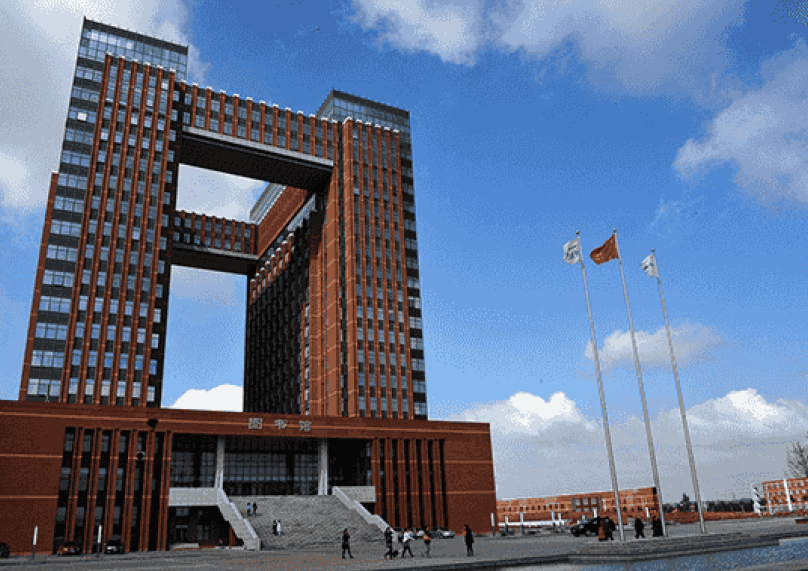
- The library is an important learning base. The library holds 230,000 volumes of medical professional books, and the electronic resource database receives over 12,000 visits monthly. 68% of international students visit the library more than 3 times a week for research and paper writing.
- Study rooms are divided into “Silent Zones” and “Discussion Zones.” The seating utilization rate in the Silent Zone is consistently above 90%, and the Discussion Zone is equipped with projection equipment for group assignments.
- One student said, “The library has medical dictionaries and the latest journals, which saves a lot of time running to bookstores.”
Learning Communities
There are currently 20 international student learning communities, covering areas such as medical foundation, clinical skills, and language improvement, with 81% of members raising their semester GPA by more than 0.3 compared to before enrollment.
For example, the “Anatomy Study Group” shares memorization mnemonics weekly, and the “HSK Mutual Aid Team” corrects each other’s essays. 90% of participants stated that the communities make learning less lonely and provide greater motivation.