

Zhongshan University hosted 400 international students from 60 countries in 2023, offering 15 bachelor’s, 20 master’s, 10 PhD programs, and awarded 50 scholarships (covering 40 countries) including Chinese Government and provincial awards.
Table of Contents
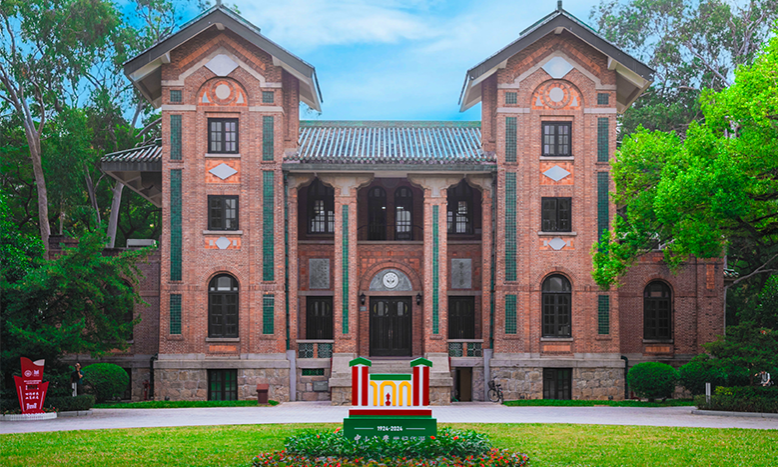
Apply to SYSU
Sun Yat-sen University (SYSU) enrolled 400 international students from 60 countries in 2023, with applications divided into undergraduate, master’s, and doctoral levels. For autumn admission, the deadline for undergraduate applications is June 30th, and for master’s applications is May 31st; for spring admission, the deadline for undergraduate applications is November 30th, and for master’s applications is October 31st. Applicants are required to submit notarized academic certificates, HSK Level 4 (180 points for undergraduates)/Level 5 (210 points for master’s)/Level 6 (240 points for doctoral students) or IELTS scores of 5.5/6.0/6.5, two recommendation letters from associate professors or above, a 500-word personal statement, and an economic guarantee of 80,000 RMB. The average review cycle is 5 weeks, the admission rate is 16%, and the material review pass rate is 85%.
- Academic Certificates: Original and photocopies must be translated and notarized by a notary public. The graduating institution must be on the list recognized by the Ministry of Education. In 2023, 12 applications were returned due to unrecognized institutions, with a certification cycle of 10 working days.
- Language Scores: HSK scores are valid for 2 years (Level 4 with 180 points for undergraduates, Level 5 with 210 points for master’s, Level 6 with 240 points for doctoral students) or equivalent IELTS/TOEFL scores. Indicate SYSU’s code 10558 when sending scores. In 2023, the admission rate for applicants with dual qualifications (HSK + IELTS) was 30%.
- Recommendation Letters: Written by teachers with the title of associate professor or above, including an evaluation of academic ability. The average review time in 2023 was 2 days, and those mentioning research experience received a score 6 points higher.
- Personal Statement: Within 500 words, explaining the motivation for studying abroad and its relevance to the major. In 2023, the preliminary review pass rate for those including a specific study plan was 88%.
- Economic Proof: Bank deposit of more than 80,000 RMB frozen for 3 months or parents’ income certificate for the past 6 months. In 2023, the preliminary review pass rate for those attaching the certificate was 90%.
- Medical Examination Report: Including HIV, tuberculosis chest X-ray items. The list of designated hospitals is available on the official website. In 2023, the proportion of supplementary examinations due to missing items was 7%.
- Passport Copy: Valid for more than 18 months, with clear home page and visa page. In 2023, the proportion returned due to blurriness was 3%.
- Online Application Form: After filling out, generate a PDF to check that the pinyin of the name is consistent with the passport. In 2023, the proportion of corrections due to spelling errors was 5%.
Time Windows
Application deadlines are precisely divided into spring and autumn intake. For autumn admission, undergraduate applications close on June 30th and master’s on May 31st; for spring admission, undergraduate applications close on November 30th and master’s on October 31st. Missing the deadline requires waiting for the next year’s cycle. In 2023, 12% of applications were not submitted due to overdue.
The application period usually lasts 3 months, covering March to May (autumn intake) or September to November (spring intake). It is recommended to start preparing materials 2 months in advance to avoid conflicts with admission.
The average review cycle is 5 weeks, and complex cases such as delayed academic certification may take up to 7 weeks. In 2023, the average time for supplementing materials was 3 days. Results are notified by email, including admission opinions or a list of supplements. Confirm the degree within 7 days after receiving the provisional admission; failure to pay the seat reservation fee overdue will be regarded as giving up.
There is no difference in timelines across different levels, but the focus of materials varies. Doctoral applicants need to submit an additional research proposal. In 2023, the submission deadline for the research proposal was synchronized with the application and could not be supplemented overdue, reflecting the balance between rigidity and flexibility in the process.
Review and Admission
The review consists of two steps: preliminary material review and comprehensive evaluation. The preliminary review checks completeness and compliance. In 2023, the preliminary review pass rate was 85%. 15% of applications were returned, mainly due to missing notarization (45%), insufficient language proficiency (33%), and expired HSK scores (11%). The online interview lasts 20 minutes, assessing professional cognition and communication skills. In 2023, the interview pass rate was 80%, with questions focusing on research interests and campus integration.
Master’s and doctoral applicants need to submit a research proposal. In 2023, the average score of the research proposal was 82 points, and the admission rate for those with scores above 85 points was 90%. Undergraduate admission focuses on a high school score average of over 80 points (78% of admitted students) and international competition experience (adding 8 points). A provisional admission letter is issued after admission. In 2023, the confirmation rate was 97%; most unconfirmed cases were due to visa delays, and 5 students were admitted to fill vacancies in clinical medicine and computer science.
Confirm Enrollment
Log in to the system to pay the seat reservation fee within 7 days of receiving the admission notice to confirm the degree. In 2023, 3% of students gave up due to overdue payment. After payment, download the official letter to apply for an X1 visa. For those with complete materials, the processing cycle is 10 working days with a pass rate of 95%.
Select dormitories online 15 days before the start of the semester. Double rooms account for 75% with air conditioning and private bathrooms, and single rooms (25%) require application, with a monthly cost difference of 200 RMB.
Participate in the freshman orientation, including campus tours and course selection guidance. In 2023, the participation rate was 96%, with one-on-one senior mentors assigned. Bring the admission letter, passport, payment voucher, and medical examination report for on-site verification, then collect the campus card and activate the account. The library’s electronic resources include databases such as Web of Science. Laboratories are open from 8:00 to 22:00. In 2023, the coverage rate of freshman equipment use training was 100%.
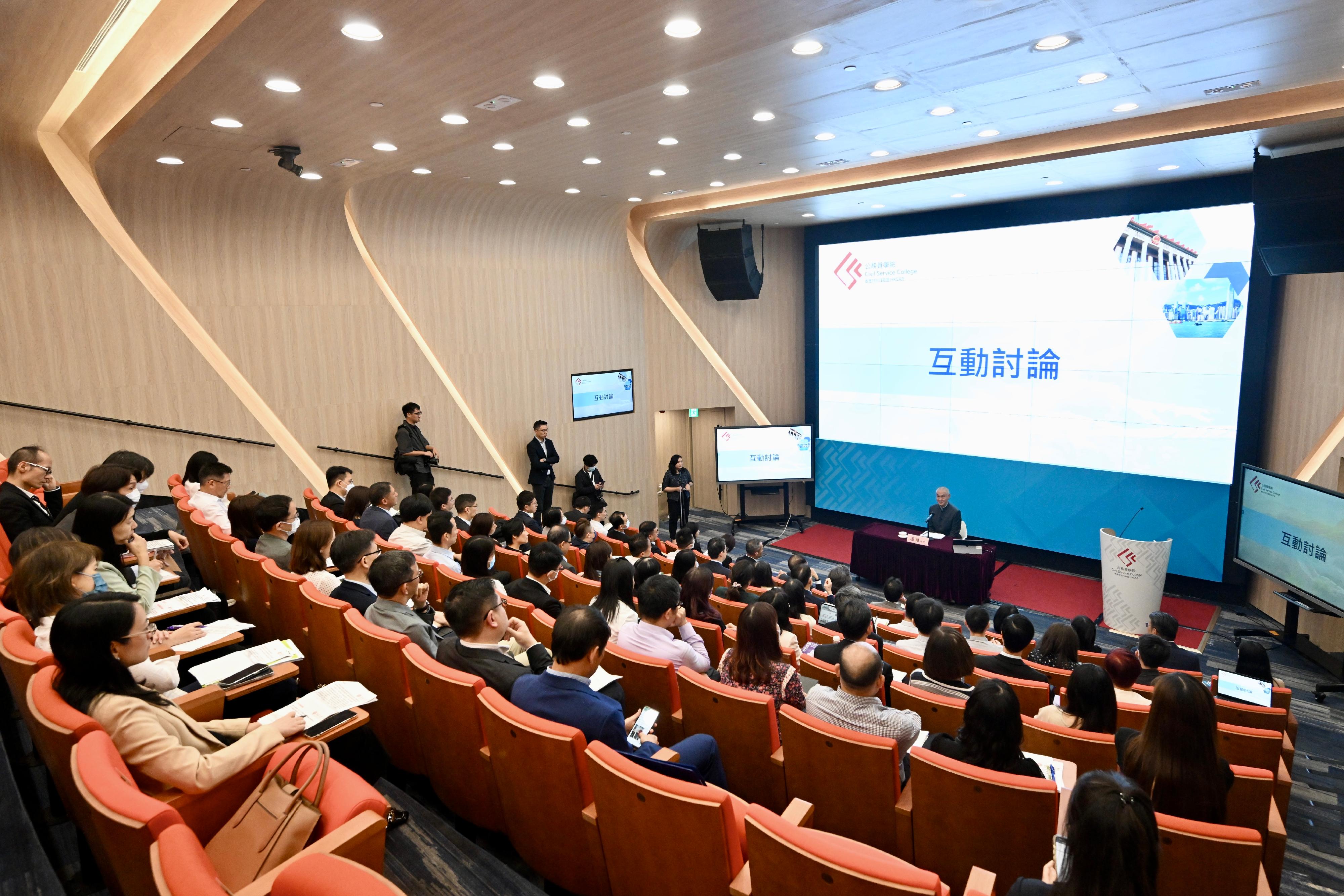
SYSU Academics
In 2023, 400 international students from 60 countries were studying at SYSU, with 15 undergraduate majors, 20 master’s programs, and 10 doctoral programs. Popular majors include clinical medicine, computer science, and business administration. Bilingual teaching accounts for 70% of courses, and practical courses account for 30%. Academic resources such as Web of Science databases are open to students, and the annual utilization rate of laboratories is 85%. The academic structure is analyzed below.
|
|
|
|
|---|---|---|
|
|
|
|
|
|
|
|
|
|
|
|
|
|
|
|
|
|
|
|
Levels and Majors
SYSU’s academic programs for international students are differentiated by level. Among the 15 undergraduate majors, clinical medicine, computer science, and business administration are the top three in applications, accounting for 25%, 20%, and 18% of undergraduate applications respectively. The 4-year curriculum includes 1 semester of internship in hospitals or enterprises. In 2023, Asian students accounted for 55% of the 150 undergraduate international students.
The 20 master’s programs focus on artificial intelligence, finance, and public health. The 3-year program is divided into academic type (60% research-oriented) and professional type (40% practice-oriented). In 2023, dual-degree programs (co-organized with overseas universities) accounted for 15% of the 200 enrolled master’s international students, enhancing employment competitiveness.
The 10 doctoral programs mainly focus on materials science, clinical medicine, and philosophy. The 4-year program requires the publication of core journal papers. In 2023, 40% of the 50 doctoral international students had SCI papers, with an average research proposal score of 83 points. The admission rate for those with scores above 85 points was 90%, reflecting strict control over academic depth.
Courses and Teaching
Course teaching centers on bilingual connection and competency development. In 2023, 70% of courses were bilingual, using English textbooks with Chinese glossaries. Core courses such as computer programming and microeconomics are taught entirely in English, while auxiliary courses use Chinese to explain difficult points. The average student evaluation score for teaching was 4.6 points (out of 5).
Practical courses account for 30%, including experimental operations, simulated diagnosis and treatment, and enterprise sand table deduction. In 2023, engineering students participated in 40 university-enterprise training projects, producing 5 patents. Medical practical courses use a clinical case database (including 200 typical cases), with a student diagnosis accuracy rate of 85%.
Classroom interaction includes 2 group discussions per week and 1 case debate per month. In 2023, the participation rate was 90%. Teaching assistants (doctoral students) responded to inquiries within an average of 3 hours. Chinese and English reports accounted for 80% of mid-term and final assessments, reflecting the adaptability of academic output.
Academic Resources
Core academic resources are open to international students. In 2023, the library had 500,000 foreign language books, including classic works in medicine and science & engineering. There were 30 electronic databases covering SCI, EI, and CNKI, with an annual visit volume of 600,000 times and an average of 150 uses per international student.
There are 20 laboratories, including artificial intelligence laboratories and biomedical engineering laboratories, with equipment updated every 2 years. In 2023, the opening rate was 95%, and international students accounted for 40% of reservations. Among them, the materials science laboratory shared 10 pieces of equipment such as SEM electron microscopes to support doctoral research projects.
An average of 50 academic lectures are held annually, delivered by scholars from home and abroad. In 2023, international students participated in 30 lectures (60% of the total), covering topics such as quantum computing and global health, with an average of 2 questions per person in interactive Q&A sessions.
Research support includes an international student innovation fund. In 2023, 10 projects received funding for reagent procurement and data collection, with a completion rate of 90%.
SYSU Scholarships
In 2023, SYSU established four types of scholarships for international students, awarding a total of 50 scholarships covering 40 countries, including the Chinese Government Scholarship, Guangdong Provincial Government Scholarship, President’s Scholarship, and Excellent International Student Scholarship. Among them, the Chinese Government Scholarship has the highest proportion; provincial and university scholarships focus on academic incentives, and special scholarships support the development of expertise. Applications must adhere to time nodes, meet material requirements, and align with review preferences.
| Scholarship Name | Number of Awardees in 2023 | Proportion of Total Scholarship Recipients | Target Beneficiaries | Core Content |
|---|---|---|---|---|
| Chinese Government Scholarship | 30 | 60% | Outstanding undergraduate, master’s, and doctoral students | Full waiver of tuition and accommodation fees plus living allowance |
| Guangdong Provincial Government Scholarship | 15 | 30% | Degree-seeking international students | 50% tuition waiver plus fixed living allowance |
| SYSU President’s Scholarship | 5 | 10% | Current students ranked in the top 10% academically | Full tuition waiver plus annual academic reward |
Chinese Government Scholarship Support
The Chinese Government Scholarship is the highest-level funding for international students at SYSU. In 2023, 30 recipients accounted for 60% of the total scholarship winners, covering all academic levels. It primarily selects outstanding students from developing countries with strong academic potential. Applications must be submitted through the China Scholarship Council (CSC) system or recommended by the university. The review focuses on an average score of 85 or above in high school/undergraduate studies, HSK Level 5 (210 points) or equivalent IELTS 6.0. Comprehensive evaluation includes 60% academic potential and 40% cross-cultural adaptability.
Recipients enjoy full waivers of tuition and accommodation fees, plus a living allowance. Doctoral students receive additional research startup funds for equipment procurement and literature subscriptions, with an average of about 20,000 RMB per doctoral student in 2023. The review cycle averages 12 weeks, with results announced by the CSC. The number of awardees from Guangzhou Medical University increased by 10% compared to 2022, reflecting deepened cooperation. Recipients must submit a study report each semester, including course progress and research output. In 2023, the complete submission rate of reports was 95%, and those who failed to meet the standard had their review weight reduced by 20% the following year.
Focus of Provincial and University Scholarships
Provincial and university-level scholarships focus on incentivizing academic continuity. In 2023, 15 recipients of the Guangdong Provincial Government Scholarship accounted for 30%, and 5 recipients of the SYSU President’s Scholarship accounted for 10%, totaling 40% of all winners. Provincial scholarships require applicants to have been admitted to SYSU, with an undergraduate GPA of 3.0 or above and a master’s GPA of 3.2 or above, and the reward includes 50% tuition reduction plus a fixed allowance.
In 2023, 20% of applications were screened out due to insufficient GPA. Renewal requires maintaining stable academic performance, and the President’s Scholarship is only open to current students selected annually based on academic performance (top 10%).
The average GPA of 2023 awardees was 3.6, with master’s students accounting for 55%, doctoral students 30%, and undergraduate students 15%. In addition to full tuition waiver, an annual academic reward is provided. The review considers attendance rate of over 95% and written evaluations from supervisors. Both scholarships require submission of original transcripts and recommendation letters from associate professors or above.
In 2023, recommendation letters mentioning research experience received a score 6 points higher. The notarization and certification cycle for materials is 10 working days, and 8% of applications were returned due to translation flaws, reflecting the review’s focus on academic stability.
Renewal Assessment
Scholarship renewal is centered on sustained academic performance. In 2023, the renewal pass rate for provincial and university scholarships was 85%. The main reasons for elimination were failing a single course (score below 70 points) or disciplinary violations/absences exceeding 10% of total class hours. Recipients must submit a 500-word study report each semester, including course insights, participation in practical activities, and next-stage goals. In 2023, the satisfaction score for those who submitted complete reports was 92 points (converted to a 5-point scale); those who failed to submit had their scholarships suspended. Chinese Government Scholarship recipients are additionally required to participate in an annual academic presentation to showcase research results or clinical skill progress.
In 2023, the presentation pass rate was 90%, and those who failed had their funding amount reduced by 30% the following year. Scholarships are disbursed in two semesters, with registration status and academic performance verified at the beginning of each semester.
In 2023, 3% of scholarships were suspended due to failure to register on time, which could be restored after supplementary registration. Those with special difficulties could apply for temporary adjustments; 5 cases were approved in 2023, all with sick leave certificates, with a maximum adjustment cycle of 3 months to ensure funding continuity. The average GPA of renewal recipients was 3.6, higher than the 3.2 of first-time recipients, reflecting the incentive’s role in improving academic performance.
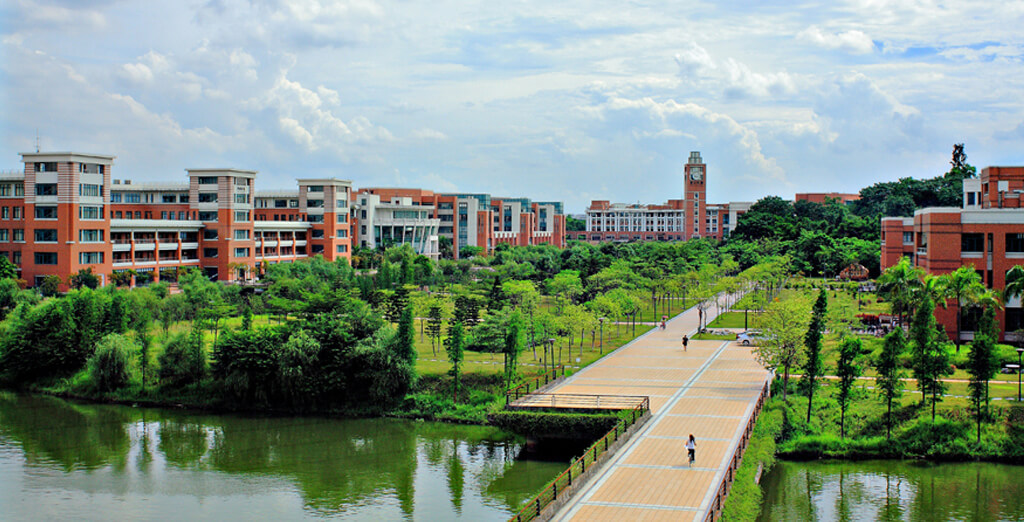
SYSU Campus
In 2023, 400 international students from 60 countries were studying at SYSU, with daily life covering accommodation, catering, clubs, culture, and other dimensions. Double dormitory rooms account for 75%, single rooms 25%, with an occupancy rate of 97%. There are 4 international food windows in the canteens, serving an average of 700 people per day. 32 clubs hold 110 activities annually. The library has 500,000 foreign language books, and 10 cultural activities are held annually with a participation rate of 90%.
Accommodation and Catering Experience
Accommodation and catering for international students at SYSU are oriented towards practicality and convenience. Double rooms account for 75% as the standard, and single rooms (25%) require application. The overall occupancy rate in 2023 was 97%, reflecting a good supply-demand match. Each room is equipped with air conditioning, a private bathroom, and a network interface. Public kitchens on each floor are equipped with microwave ovens, induction cookers, and 40 sets of study desks and chairs to meet group study needs. The dormitory management team of 4 people works in 24-hour shifts, with an average maintenance response time of 3 hours and a resolution rate of 95%.
The canteens have 4 international food windows, serving an average of 700 people per day, offering more than 20 cuisines including Chinese (north and south), western, halal food, such as pasta, Indian curry, and Vietnamese pho. Ingredients are inspected daily with a 100% qualification rate. In 2023, the satisfaction score was 4.5 points, with a suggestion book collecting 12 suggestions monthly and 2 improved dishes.
The dormitory area is equipped with convenience stores, parcel lockers, and 15 washing machines, with peak-hour waiting time no more than 8 minutes. In 2023, there were only 2 complaints (0.6%) due to facility failures, reflecting efficient operation and maintenance.
Club Activities
International student clubs are centered on interest connection, with 32 registered clubs covering culture, sports, academics, and public welfare. In 2023, 110 activities were held with a participation rate of 85%. The Chinese Corner is held twice a week, led by graduate students from the Chinese Department, with a cumulative participation of over 2200 person-times. The basketball team plays against the university team once a month on average and won the third place in the inter-university league.
Academic clubs such as the Medical Exchange Society held 6 case discussion meetings, delivered by teachers, with 90 international student participants. Public welfare clubs organized 4 community health lectures, serving 300 residents.
Cultural and sports clubs: the dance team rehearsed 3 programs and performed at the university’s freshmen welcome party; the photography club held a campus photography exhibition with 50 works on display.
Club recruitment is concentrated in September. In 2023, the freshmen participation rate was 70%, and the retention rate of senior members was 88%, reflecting strong community cohesion.
Activity venues such as on-campus multi-function halls and playgrounds are prioritized for use, with an average approval cycle of 2 days to ensure implementation efficiency.
Cultural Experience
Cultural experiences focus on integrating tradition and modernity, with an average of 10 activities held annually, such as Mid-Autumn Garden Parties and Spring Festival Galas. In 2023, the Mid-Autumn Festival event included lantern riddles, touhu (arrow throwing), and mooncake DIY, with 400 participants. The Spring Festival Gala featured lion dance and martial arts performances, attracting 500 participants. The calligraphy experience course had a satisfaction score of 4.7 points, with 150 works created.
Intangible cultural heritage paper-cutting workshops invited inheritors to teach, with 60 international students mastering basic techniques in 2023.
The library organized an academic and cultural month, exhibiting reprints of ancient medical books and acupuncture models, with 600 visitors. Cultural mentors provided one-on-one consultations, serving an average of 25 people monthly to help understand local customs.
Cross-cultural salons are held once a month, inviting Chinese and foreign students to share differences in food and festivals. In 2023, 6 sessions were held with an 80% participation rate, covering topics such as Cantonese morning tea and traditional Chinese medicine health preservation.
Activities emphasize participation. In 2023, feedback questionnaires showed that 92% of participants believed it enhanced their intuitive understanding of Chinese culture.
SYSU Awards
In 2023, SYSU established three types of honorary awards for international students: Academic Excellence Award, Practical Innovation Award, and Cultural Exchange Award, commending a total of 50 recipients from 40 countries. The selection focuses on academic performance, practical achievements, and cross-cultural contributions. Award winners receive certificates, priority access to campus resources, and academic exchange opportunities. The award settings and selection details are analyzed below.
Academic Excellence Award
The Academic Excellence Award is for international students with outstanding academic and research performance. In 2023, 20 recipients accounted for 40% of the total awards. The core threshold for selection is a GPA of 3.7 or above (the average GPA of 2023 winners was 3.7). Master’s and doctoral students must have published core journal papers or participated in provincial and ministerial-level research projects, while undergraduate students focus on course papers and competition awards.
The selection process includes departmental recommendation and academic committee review. In 2023, 30% of doctoral winners had SCI papers, 25% of master’s winners participated in university-enterprise joint research projects, and 15% of undergraduate winners won provincial or above academic competition awards.
The reward includes a university-level certificate, free access to the library’s foreign language databases, and priority qualification to participate in international academic conferences. In 2023, the participation rate of winners in conferences was 80%, with 5 giving presentations in sub-sessions.
The review cycle is 2 months. Materials required include transcripts, the first page of papers, and supervisor recommendation letters. In 2023, 10% of applications were screened out because the recommendation letter did not mention research potential, reflecting strict control over academic depth.
Practical Innovation Award
The Practical Innovation Award encourages the transformation of theory into applied achievements. In 2023, 15 projects won the award, accounting for 30% of the total awards, covering fields such as engineering experiments, business sand tables, and cultural and creative design. Projects must have a completion score of 85 points or above and produce displayable results.
2023 winning projects included intelligent medical robot prototypes (engineering), cross-border e-commerce simulation operation plans (business), and digital exhibition of Lingnan intangible cultural heritage (cultural and creative). Among them, 5 projects obtained utility model patents, and 3 projects were adopted and trialed by enterprises.
The selection is conducted jointly by the Academic Affairs Office and practical bases, focusing on 40% innovation, 30% practicality, and 30% teamwork. In 2023, 60% of the teams were interdisciplinary combinations, such as medical and computer students co-researching case databases.
The reward includes an innovation fund of 5,000 RMB and priority access to laboratories. In 2023, the success rate of winners applying for university-level research projects was 70%, higher than the 40% of ordinary students, reflecting the incentive’s role in boosting practical motivation.
Cultural Exchange Award
The Cultural Exchange Award recognizes contributors to cross-cultural integration. In 2023, 15 recipients accounted for 30% of the total awards. The selection is based on the frequency of participation in cultural activities, the effectiveness of cross-cultural collaboration, and the influence of cultural communication.
2023 winners participated in an average of 10 activities such as Mid-Autumn Garden Parties and International Cultural Festivals annually, organized 24 Chinese Corner sessions with a cumulative participation of 800 person-times, and led the shooting of campus cultural documentaries with 5,000 views.
The selection is organized by the Youth League Committee and Student Union, focusing on 35% activity planning, 35% participation rate, and 30% feedback score. In 2023, 50% of the winners were club leaders, such as the basketball team captain who promoted 4 Chinese-foreign friendship matches.
The reward includes a cultural exchange fund of 3,000 RMB and priority qualification for exchange programs with overseas sister universities. In 2023, 3 winners went to the Chinese University of Hong Kong for exchange through this award, with feedback showing a 25% improvement in cross-cultural communication skills, reflecting the award’s role in promoting diverse experiences.