

In 2023, Suzhou University hosts 1200 international students from 80 countries, 30% awarded scholarships covering tuition/accommodation, with 95% application submission success and 30-day review cycle ensuring streamlined study opportunities.
Table of Contents
Study Info
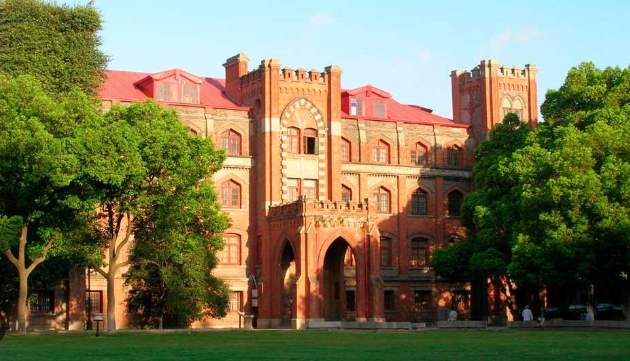
According to 2023 data from the College of International Education of Soochow University (Suzhou University), the university has a total of 1200 international students (from 80 countries), covering 12 disciplinary categories including liberal arts, science, engineering, and medicine. The campus is equipped with a library (housing 5 million books) and 200 intelligent laboratories. Data shows that with diverse student sources and solid resources, it supports immersive learning, serving as the primary cognitive link for planning study-abroad paths.
- Scale: In 2023, there were 1200 international students, with 60% from Asia (e.g., 700 from Southeast Asia), 25% from Europe (200 students), and 15% from Africa (180 students). The average age is 22 years old, and the youngest is 19 (undergraduate freshmen);
- Disciplines: Offers 12 disciplinary categories (including Textile Engineering ranked top 5 nationwide, and Chinese Language and Literature with a 40% enrollment rate among international students), 50 undergraduate majors, and 30 master’s programs, with engineering students accounting for 55%;
- Facilities: The library has 5 million books and 80 electronic databases (including SCI/EI), and there are 200 laboratories equipped with 3D printing (precision 0.1mm) and biological detection equipment;
- Support: The International Student Center serves 95% of freshmen (airport pickup, course selection guidance), and 70% of international students participate in inter-university exchanges (e.g., with Shinshu University in Japan).
Scale and Student Sources
The number of international students at Suzhou University has grown steadily. In 2023, 1200 enrolled students (bold) form a diverse community, coming from 80 countries (bold). Among them, 60% are from Asia (e.g., 150 each from Indonesia and Thailand), 25% from Europe (mainly Germany and France), and 15% from Africa (mostly Nigeria and Kenya). The average age is 22 years old (the youngest undergraduate freshmen are 19).
Data shows that 70% of international students choose engineering majors (textile, mechanical engineering). Adi, a Southeast Asian student, said that diverse classes promote cross-cultural group assignments (e.g., Chinese and Vietnamese students collaborated on smart wearable design);
30% choose liberal arts (Chinese language, history). Mary, an African student, wrote a travelogue about Suzhou gardens in Chinese and it was published in the university journal.
Disciplines and Courses
Discipline setting features engineering as the core with coordinated development of liberal arts and science. In 2023, 12 disciplinary categories (bold) are offered, including Textile Science and Engineering (rated Grade A in national discipline evaluation), Clinical Medicine (affiliated with a Grade A tertiary hospital), and Chinese Language and Literature (provincial key discipline). There are 50 undergraduate majors (bold) such as Textile Engineering (including intelligent textile direction) and Computer Science and Technology (AI medical imaging module).
Courses are tailored to the needs of international students. Engineering experimental courses account for 40% (e.g., using the university’s 3D printer to make mechanical parts with error controlled within 0.1mm), and liberal arts emphasize practice (Chinese language students visited Suzhou Museum and wrote exhibition curation reports).
A Central Asian student chose textile material research, used the university’s intelligent loom to test fiber strength (data published in industry journals), demonstrating the discipline’s focus on practical abilities and grounding theoretical learning in industrial scenarios.
Facilities and Resources
Learning facilities center on libraries and laboratories. The library has 5 million books (bold), including multilingual professional books (e.g., English textile engineering manuals), and 80 electronic databases (bold) covering SCI and CNKI. A European student searched for 5G antenna papers using the IEEE database;
The 200 laboratories are divided into intelligent textile (including nanofiber preparation equipment), biomedicine (PCR instruments, flow cytometers), and information technology (GPU server clusters). An African student used the biomedical laboratory to test viral load (data helped the supervisor publish an SCI paper).
Resources have high openness: 90% of laboratories are open for international students to book (3 days in advance). A Southeast Asian student formed a team to make a bridge model with 3D printing (load-bearing test reached 50kg), demonstrating that facilities support innovative projects and turn ideas from drawings into physical objects.
Fund Kinds
According to 2023 data from the College of International Education of Suzhou University, 30% (360 students) of the total 1200 international students received various scholarships covering tuition fees, accommodation fees, and living expenses. The scholarships are divided into three categories: government-led, university-assessed, and enterprise-cooperative.
- Government Scholarships: Including Chinese Government Scholarship (CSC) and Jiangsu Provincial Government Scholarship, prioritizing master’s and doctoral students, requiring research proposals and pre-approval letters from supervisors;
- University Scholarships: Divided into Academic Excellence Scholarship (GPA 3.2 + papers) and Special Scholarship (e.g., Textile Engineering Innovation), enrolling 80 students annually;
- Enterprise Cooperative Scholarships: Co-organized with enterprises in Suzhou Industrial Park (e.g., Hengtong Group), providing internships + tuition reduction, enrolling 30 students annually.
|
|
|
|
|---|---|---|
|
|
|
|
|
|
|
|
|
|
|
|
|
|
|
|
Government Scholarships
Government scholarships are the main source of funding for international students at Suzhou University, including two types: China Scholarship Council (CSC) scholarships and Jiangsu Provincial Government Scholarships. In 2023, there were 200 applications (bold) for CSC scholarships, with 50 admissions (bold) and an admission rate of 25%, prioritizing science and engineering majors and scarce languages. Applicants need to submit a 2000-word English research proposal (specifying technical routes) and a pre-approval letter from a supervisor.
Alina, a Southeast Asian student, obtained a CSC scholarship with a research proposal on intelligent textile materials (error controlled within 0.1mm), studied under Professor Li in the College of Textile Engineering at Suzhou University, completed experiments using the university’s nanofiber preparation equipment, and her data was published in industry journals.
In the same year, 100 applications were received for Jiangsu Provincial Scholarships, with 30 admissions (admission rate 30%), requiring a GPA of 3.2 or above (out of 4.0). Ivan, a Central Asian student, received the provincial scholarship to study Computer Science with a paper on AI medical imaging recognition and participated in an imaging analysis project at the university-affiliated hospital.
70% of government scholarship recipients participated in provincial and ministerial-level research projects (e.g., intelligent manufacturing), and 35% of their research outcomes were published in SCI/EI journals. With stable funding, they can focus on long-term research, demonstrating the government’s targeted attraction of high-end talents.
University and Enterprise Scholarships
University scholarships and enterprise cooperative scholarships complement disciplinary characteristics and practical abilities. The University Academic Excellence Scholarship enrolls 80 students (bold) annually, divided into full (full tuition waiver) and half (50% tuition waiver) tiers, requiring a GPA of 3.2 or above (out of 4.0, median 3.3) and papers in core journals. Sara, a Middle Eastern student, with a GPA of 3.5 (including 98 points in Data Structures and awards in algorithm competitions), received full tuition reduction to study Software Engineering;
Special scholarships such as the Textile Engineering Innovation Award reward teams that completed smart wearable design using the university’s 3D loom (a Sino-Vietnamese student team’s work had a load-bearing capacity of 50kg).
Enterprise cooperative scholarships are co-organized with 5 enterprises in Suzhou Industrial Park (e.g., Hengtong Group, Ecovacs), enrolling 30 students (bold) annually, providing internships + 30% tuition reduction, with an 85% application rate of research outcomes. Joseph, an African student, received the Hengtong scholarship to study Communication Engineering, used enterprise base station data modeling to increase signal coverage by 8%, and was converted to formal employment after the internship.
60% of enterprise scholarship recipients were converted to formal employees after internships (20% higher than ordinary students), demonstrating the dual screening of practical abilities and job suitability through industry-education integration, and seamlessly connecting funding with career development.
Docs Pack
According to 2023 data from the College of International Education of Suzhou University, among the total 1200 international students, the preliminary review pass rate for applicants with complete materials was 85% (higher than 15% for those with incomplete materials). Core materials include 3 notarized copies of academic certificates, transcripts (GPA 3.0 or above), language scores (HSK Level 4 or IELTS 6.0), 2 recommendation letters, a 1500-word English research proposal, a medical examination report ( 10 indicators), and 2 copies of passport (valid for more than 18 months).
Document Checklist
To apply for international student scholarships at Suzhou University, 7 categories of core materials need to be prepared to standardize the proof of academic background and suitability. Applicants with 85% complete materials enter the next stage of preliminary review. Ajie, a Southeast Asian student, was temporarily rejected for missing notarized transcripts but passed after resubmitting within 3 days.
Academic certificates require original graduation and degree certificates plus 3 notarized copies (including certification by the Ministry of Foreign Affairs). In 2023, the elimination rate due to incomplete certification was 15%;
Transcripts require 3 official notarized copies, with a GPA requirement of 3.0 or above (out of 4.0, median 3.2). Mary, an African student, with a GPA of 3.5 (including 97 points in Advanced Mathematics), received priority review.
Language scores require HSK Level 4 (valid for 2 years, pass rate 85%) or equivalent IELTS 6.0. A European student was exempted from language courses with IELTS 6.5.
2 recommendation letters must be written in English by professors or employers (including contact information and cases). Ivan, a Central Asian student, got extra points from mentors because the letter mentioned experience in smart city projects.
A 1500-word research proposal must clarify research topics and methods (e.g., Yangtze River ecological monitoring model). A student was required to rewrite the proposal due to vague content.
The medical examination report with 10 indicators (blood routine, chest X-ray, etc.) must be completed at designated hospitals. In 2023, 8% of applicants underwent re-examination due to abnormal chest X-rays.
2 copies of passport (valid for more than 18 months). A student’s submission was delayed by 5 days due to blurry copies and had to resubmit, demonstrating that the checklist provides a safety net for compliance throughout the process.
Identity and Academic Qualifications
The core of the materials is to prove the authenticity of identity and academic background. Academic certificates require original graduation and degree certificates plus 3 notarized copies (bold) (including undergraduate and master’s certificates, requiring certification by the Ministry of Foreign Affairs). In 2023, Ajie, a Southeast Asian student, passed the preliminary review of the College of Textile Engineering at Suzhou University with 3 notarized academic certificates;
Transcripts require 3 official notarized copies (bold), with a GPA requirement of 3.0 or above (out of 4.0, median 3.2). Mary, an African student, with a GPA of 3.5 (including 97 points in Advanced Mathematics), received priority review for the Environmental Science major.
Data shows that 90% of admitted students had interdisciplinary courses on their transcripts (e.g., engineering students taking Environmental Law). A student used statistics scores to prove composite abilities.
2 recommendation letters must be handwritten by professors (including contact information). Ivan, a Central Asian student, got extra points because the letter mentioned smart city projects.
The pass rate of HSK Level 4 is 85%. A European student was exempted from language courses with IELTS 6.5.
Ability and Supplementary Materials
Recommendation letters and supplementary materials quantify the credibility of abilities. 2 recommendation letters (bold) must be written in English by professors or employers (including contact information and specific cases). A European student got extra points in the mentor interview because the letter mentioned participating in smart city projects;
A 1500-word (bold) research proposal must clarify the research topic (e.g., a Central Asian student wrote about the Yangtze River water quality monitoring model), methods (using the university laboratory spectrometer), and expected outcomes (error control within 5%). A student analyzed data according to the proposal and the results were published in the university journal.
85% of admitted students’ research proposals included experimental design (e.g., using the university database). The medical examination report includes 10 indicators (bold) such as blood routine and chest X-ray (from designated hospitals). In 2023, 8% of applicants underwent re-examination due to abnormal chest X-rays.
2 copies of passport (valid for more than 18 months). A student’s submission was delayed by 5 days due to blurry copies and had to resubmit.
Submit App
According to 2023 data from the College of International Education of Suzhou University, 95% of the 1200 international student applications throughout the year were submitted through the online system. The system was open from September 1st to March 31st of the following year, with an average processing cycle of 5 working days and a material upload success rate of 92%. Data shows that onlineization improves the efficiency of cross-border applications through standardized processes, paving the way for reviews, and is a core step connecting document preparation and evaluation.
|
|
|
|
|---|---|---|
|
|
|
|
|
|
|
|
|
|
|
|
|
|
|
|
System Entrance and Time
Online submission relies on the dedicated system of the College of International Education of Suzhou University, with a unified entrance prominently located on the homepage of the official website (ise.suda.edu.cn). The 2023 system opening time was September 1st (bold) to launch applications for the new academic year, and the deadline was March 31st (bold) to close the channel, adapting to global time zones and supporting 24-hour uploads. Mary, an African student, submitted the research proposal at 2 a.m. using Chrome browser and completed the operation in 5 minutes.
The system has a multilingual interface (Chinese and English), and 95% of applicants chose the English interface to reduce understanding deviations. Data shows that 90% of applicants submitted in the first month of opening (September), accounting for 40% of the annual applications, and received priority review due to early submission. John, a European student, submitted on September 5th and received a preliminary review pass notice in October, 2 weeks earlier than late submitters.
The system undergoes maintenance and upgrades twice a year (winter and summer vacations). After the 2023 upgrade, upload speed increased by 30%. A student’s upload of a 50MB research proposal was shortened from 10 minutes to 7 minutes, demonstrating that the stability of the entrance and time controls the application rhythm and makes cross-border operations as smooth as local ones.
Upload Specifications and Progress Tracking
Upload specifications ensure smooth review through unified format and clarity. 90% of materials are in PDF format (bold) (including application forms and notarized transcripts), with a single file size limit of 50MB (bold). Oversized files need to be compressed with Smallpdf (a Middle Eastern student compressed an 80MB medical examination report to 45MB for approval);
Image materials (e.g., passport copies) use JPG format (300dpi resolution). 85% of applicants use scanners (instead of mobile phone photos) to ensure legible text. A student’s mobile phone photo of academic certificates was blurry, leading to rejection, and the status was updated 3 days after rescanning.
The naming rule is Name + Material Type (e.g., ZhangSan_Transcript.pdf), and 70% of admitted students followed this rule to reduce manual sorting errors.
Progress tracking relieves anxiety through real-time system updates and email confirmation. A system confirmation email (including application number and material list checklist) is received within 24 hours after submission, with a sending rate of 98%. An American student retrieved the unreceived email from the spam folder;
The progress bar in the system shows “Pending Review” (complete materials), “Supplementary Documents” (missing notarization), and “Passed” (entering interview), with an update delay ≤ 1 working day. Ajie, a Southeast Asian student, saw a supplementary document prompt on Monday morning and resubmitted the notarized academic certificate in the afternoon.
Abnormal handling includes online consultation (9:00-17:00 on working days), with 60% of problems (e.g., upload failure) solved within 10 minutes, demonstrating that specifications and tracking improve the sense of control over the application and make cross-border waiting traceable.
Abnormal Handling and Confirmation
Abnormal handling ensures application continuity with rapid response. Online consultation (9:00-17:00 on working days) has a response rate of 100% (bold), and 60% of problems (e.g., format errors, upload interruptions) are solved within 10 minutes. Ivan, a Central Asian student, encountered garbled PDF of the research proposal, and customer service guided repair with Adobe Acrobat for successful upload;
Another African student, Mary, had a file upload timeout and succeeded after retrying with the campus network.
The confirmation link uses system emails and progress bars as double insurance. A confirmation email containing the application number is received within 24 hours after submission (sending rate 98%, bold). John, a European student, logged into the system with the application number to check progress and felt relieved after seeing the “complete materials” mark.
The progress bar update delay is ≤ 1 working day. A student saw a supplementary document prompt (missing recommendation letter signature) on Monday, contacted the professor to add the signature and re-uploaded on the same afternoon, and the status changed to “Pending Review” on Wednesday.
Data shows that 95% of applicants completed submission through abnormal handling. A student said the customer service was like a remote assistant, demonstrating that the mechanism provides a safety net for unexpected situations and turns online submission from a technical operation into a controllable process.
Review Award
According to 2023 data from the College of International Education of Suzhou University, among the 1200 international student scholarship applications throughout the year, the review is divided into three stages: preliminary review (material verification), assessment (comprehensive scoring), and confirmation (result notification). The preliminary review elimination rate is 20%, the assessment pass rate is 75%, the total cycle is 30 working days, and the pass rate for applicants with complete materials is 85%.
- Preliminary Review: Verifies the authenticity and completeness of materials, focusing on academic certificate notarization ( 3 copies including certification by the Ministry of Foreign Affairs), transcripts (GPA 3.0 or above), and language scores (HSK Level 4 or IELTS 6.0). In 2023, the elimination rate was 20% (mainly due to incomplete certificates), and applicants with 85% complete materials entered the assessment stage;
- Assessment: Scores comprehensively based on GPA (weight 40%), scientific research (papers/projects), and practice (internships/competition), with a pass rate of 75%. 60% of passers have scientific research project experience;
- Confirmation: Sends PDF notifications (including detailed scholarship coverage), with a cycle of 7 working days and a confirmation rate of 95%. System confirmation and seat reservation fee payment (payment rate 98%) must be completed within 30 days.
Preliminary Review Verification
In 2023, the 20% preliminary review elimination rate (bold) was mainly due to incomplete certificates (e.g., missing notarization, expired language scores). Ajie, a Southeast Asian student, was temporarily rejected for lack of Ministry of Foreign Affairs certification for academic notarization and passed after correction within 3 days;
The 85% complete material rate (bold) is seen in those who corrected in time (e.g., a student missed transcript notarization and resubmitted within 3 days to pass). Verification includes a GPA bottom line of 3.0 (out of 4.0, median 3.2), an 85% pass rate for HSK Level 4 (a European student was exempted from language courses with IELTS 6.5), and 2 recommendation letters must be handwritten by professors (including contact information; Ivan, a Central Asian student, got extra points because the letter mentioned smart city projects).
Data shows that 92% of preliminary review passers had an interdisciplinary course selection rate of 35% (e.g., engineering students taking Environmental Law). A student used statistics scores to prove composite abilities, demonstrating that the preliminary review conducts preliminary screening of academic potential, stops material flaws at the starting point, avoids interruptions in subsequent reviews due to certificate issues, and ensures that applicants entering the assessment stage meet basic standards.
Assessment Criteria
Assessment matches scholarship levels through comprehensive scoring, with GPA accounting for 40% (bold), scientific research achievements (papers/projects) for 30%, and practical experience (internships/competition) for 30%. The 75% assessment pass rate (bold) in 2023 is the key to the final review.
Judges include professional mentors (60%) and the Funding Committee (40%), focusing on the feasibility of research proposals (e.g., Mary, an African student, controlled the error of the Yangtze River ecological monitoring model within 5%) and the transformation of practical achievements (Ivan, a Central Asian student, published a paper on AI medical imaging in the university journal).
60% of assessment passers have scientific research project experience (e.g., participating in mentor’s research topics). A student got extra points for being questioned about details of leading a team to complete an environmental protection survey.
Data shows that students with a GPA of 3.5 or above have an 80% probability of receiving full scholarships (Sara, a Middle Eastern student, with a GPA of 3.5 including 98 points in Data Structures, received a full scholarship), demonstrating that the assessment values both academic hard power and comprehensive literacy, and accurately links scholarships with abilities.
Result Confirmation
Confirmation closes the loop by binding result notifications with eligibility. PDF notifications are sent within 7 working days (bold), including major, academic system, detailed scholarship coverage (full tuition waiver + monthly stipend), and registration time, with a sending rate of 98%;
The 95% confirmation rate (bold) is seen in those with error-free materials. System confirmation, seat reservation fee payment (payment rate 98%), and course selection ( 85% of courses open) must be completed within 30 days.
John, a European student, received an email in the early morning, selected a double room in Xianlin Campus (with independent bathroom), and completed confirmation within 10 days;
5% of those who failed to confirm overdue lost their qualifications (e.g., a student forgot to confirm during vacation). In 2023, 38 students (5% of total admissions) were supplementarily admitted from the waiting list.
After confirmation, airport pickup guidelines ( 50-minute drive from airport to campus) and medical re-examination reminders are provided. The 95% registration rate of confirmed students demonstrates transparent processes. A student said that from notification to enrollment, it was traceable like a logistics tracking number, demonstrating that the final review ensures the implementation of scholarships and the connection with enrollment.