

In 2023, Chongqing Medical University admitted 25% of 850 international applicants (213 total), with 65% receiving scholarships (15% freshman, 22% academic), and a 150-credit program backed by 80% academic support usage.
Table of Contents
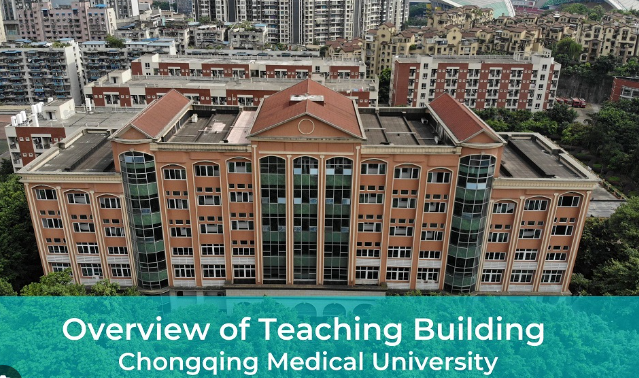
Entry Requirements
In 2023, the International Education College of Chongqing Medical University received 850 undergraduate international student applications from 38 countries, finally admitting 213 students (admission rate about 25%). The core requirements focus on high school performance, language proficiency, and the completeness of actual materials.
72% of admitted students had a high school GPA in the 3.0-3.5 range (out of 4.0), and 58% of those admitted to Chinese-taught programs achieved HSK Level 4 with more than 200 points. Applications require submission of transcripts, recommendation letters, language certificates, and vaccination records. Last year, 18% of students were asked to resubmit due to incorrect material format.
Application Requirements
65% of admitted science and engineering students (such as Clinical Medicine, Pharmacy) had a high school average score of ≥85 points in individual subjects like Mathematics and Physics (out of 100). Last year, among the 28 admitted Clinical Medicine students, 25 had Mathematics 85+, 24 had Physics 85+, and only 1 was admitted exceptionally due to a Chemistry score of 92 points (better matching the experimental direction);
70% of English-taught program applicants achieved IELTS 6.0 or TOEFL 80 points. Last year, 28% of English program applicants were screened out for not meeting the language standard. Liberal arts programs (such as Nursing) focus on an average score of ≥80 points in Biology and Chinese language. Such students account for 80% of the admitted students.
Applicants must ensure the authenticity of their grades. The university verifies materials through notarization. Last year, 2 cases were disqualified due to false GPA reporting. Integrity is the basic threshold.
Material Standards
18% of applicants were asked to resubmit due to incomplete materials. Common issues include recommendation letters not on school letterhead, missing English proof of MMR vaccination, and un-notarized transcripts;
88% first review pass rate corresponds to applicants with complete materials. The review focuses on whether the GPA meets the standard and whether the language scores meet the teaching requirements.
Last year, a Southeast Asian student was asked to resubmit because the recommendation letter lacked a handwritten signature. After completion, they proceeded to the university assessment.
Review Process
After submitting the online application, a confirmation email is sent within 3 working days, which includes a material checklist;
After passing the initial review, students participate in the university assessment in December. The content includes Q&A on CMU history and Chinese situational dialogues (e.g., “Procedure for borrowing medical journals from the library”). The university assessment pass rate is 62%, mainly eliminating those who are “high-scoring but weak in communication skills.”
Those who fail can apply for a retake. 25% of retake students must score 110% of the original passing line (e.g., scoring 66 points for a 60-point course).
Program Structure
The program structure for undergraduate international students at the International Education College of Chongqing Medical University in 2023 is based on a total of 150 credits, divided into three categories: compulsory, elective, and practical, balancing professional depth and clinical foundation.
Compulsory courses account for 70% of the total credits (105 credits), covering core courses in basic and clinical medicine; elective courses account for 20% (30 credits) and include interdisciplinary subjects;
Practical courses account for 10% (15 credits) and utilize affiliated hospital resources. In the assessment, regular performance accounts for 35% (assignments, lab reports), and the final exam accounts for 65%. 85% of the courses use case-based teaching.
|
|
|
|
|---|---|---|
|
|
|
|
|
|
|
|
|
|
|
|
|
|
|
|
|
|
|
|
Curriculum System
Basic Medicine accounts for 60% of compulsory courses (e.g., Human Anatomy, Pathophysiology), using specimens, models, and virtual simulation to teach “heart valve structure.” Last year, the average score for student lab reports was 88 points;
Elective courses cover 12 interdisciplinary directions. Medical English courses teach “medical record writing terminology,” and Health Management courses analyze “chronic disease intervention cases,” with a course selection coverage of 80%.
Courses are arranged according to “theory + case study.” For example, when Internal Medicine teaches “diabetes,” it combines diet data of patients in the Chongqing area (average daily carbohydrate intake of 300 grams) to analyze the risk of complications.
Textbooks use the bilingual edition from People’s Medical Publishing House, with English abstracts in key chapters. Last year, 85% of students stated that “case studies are easier to understand than pure theory.”
Credit Allocation
Credit allocation follows the principle of “solid foundation, clinically oriented.” Practical courses account for 15 credits out of the total 150 credits (including 6 credits for clinical rotation). Rotations are arranged in the internal medicine and surgery departments of the First Affiliated Hospital, with a “patient communication log” kept for 2 weeks in each department.
Regular performance accounts for 35%, including lab operations (e.g., simulated intravenous injection) and group discussions (e.g., “Emergency Triage Priority”). Last year, an international student received bonus points for proposing an “Elderly Fall Risk Assessment Form” during a group discussion.
The final assessment is divided into closed-book (basic theory) and case analysis (e.g., “Pneumonia Diagnosis Process”). The average final exam score for the Clinical Medicine major was 82 points, 18 points higher than the entrance placement test.
Credits are linked to graduation. Failing more than 2 courses requires retaking them. The retake rate last year was 5%, showing the allocation’s constraint on academic quality.
Data shows that reasonable allocation allows international students to complete the transition from “basic memorization to clinical application” within 3 years. For example, Nursing students, through credit-based practical training, increased the pass rate for intravenous puncture operations from 60% to 95%.
Practical Components
Practical components are key to course implementation. 80% of practical courses are conducted in affiliated hospitals, including experiments, clinical rotation, and skills training.
The clinical skills assessment pass rate is 92%. Projects include CPR, sterile technique, and history taking, scored using manikins (compression depth 5-6厘米, frequency 100-120次/分).
During the rotation, students shadow internal medicine doctors and record cases such as “medication adjustment for hypertensive patients.” Last year, students submitted 120 rotation reports, and 85% were rated “qualified” by their supervising teachers.
Lab courses use virtual simulation systems (e.g., “laparoscopic cholecystectomy simulation”) to reduce practical risks. Last year, 30 students entered animal experiments after passing the system assessment.
60% of practical course instructors are attending physicians from affiliated hospitals. They use bilingual Chinese and English explanations during teaching. For example, when teaching “wound suturing,” they say “interrupted suture technique” in English.
Scholarship Types
The 2023 scholarship system for international students at the International Education College of Chongqing Medical University covers three categories: entering students, academic excellence, and social practice. 65% of current international students have received university-level or higher scholarships, with 15% of new students receiving the Freshman Sailing Scholarship, based primarily on high school GPA and language scores;
Academic scholarships are for enrolled students, requiring a GPA of ≥3.2 for two consecutive semesters. Last year, 22% of enrolled students received this award. Practical scholarships are assessed based on volunteer service hours (≥40 hours), with 32 students receiving awards for community service and academic activities.
|
|
|
|
|
|---|---|---|---|
|
|
|
|
|
|
|
|
|
|
|
|
|
|
|
Freshman Scholarship
The Freshman Sailing Scholarship is the first support offered to entering students. 15% of undergraduate freshmen received this award. Application requires a high school GPA of ≥3.0 (out of 4.0) and HSK Level 4 ≥180 points. Last year, 38 new students passed the review and received partial fee reductions.
This scholarship focuses on basic academic potential. 75% of awardees had a high school average score of ≥85 points in Mathematics and Physics (out of 100). For example, a Clinical Medicine freshman was selected for scoring 87 points in Mathematics and 188 points in HSK;
Nursing freshmen require an average score of ≥80 points in Biology and Chinese language. Last year, 18 out of 20 awardees met this standard.
The scholarship does not cover the full amount and aims to alleviate initial expenses. Awardees must submit transcripts for review each semester. Eligibility is suspended if the GPA drops below 2.8.
Data shows that the first-year failure rate for awarded freshmen is 18% lower than for non-awardees. Due to less financial pressure, they are more focused on studying. For example, a Southeast Asian freshman used the scholarship to cover accommodation fees, spent 3 extra days a week at the library, and raised their final GPA from 3.1 to 3.4.
Academic Scholarship
The Academic Excellence Scholarship is for enrolled students. 22% of awardees won it with a GPA of ≥3.2 for two consecutive semesters. No failing grades is a strict threshold.
This scholarship emphasizes sustained performance. 88% of awardees had a final exam GPA ≥3.5. For example, a Clinical Medicine student with a GPA of 3.4 and 3.5 for two semesters was outstandingly selected for scoring 92 points in the Internal Medicine case analysis defense;
Nursing students require core course (e.g., Basic Nursing) scores of ≥85 points. Last year, 23 out of 25 awardees reached this line. Selection is based on a composite score: GPA 60%, classroom interaction 20%, assignment quality 20%. For students with the same score, the teacher’s recommendation letter is considered.
The scholarship is distributed monthly, covering a portion of living expenses. Last year, 65% of awardees used it to purchase professional books (such as the bilingual edition of “Basic Nursing”).
Data shows that the average GPA of awardees increased by 0.2 the following year due to a significant incentive effect. For example, a Pharmacy student who received the academic scholarship proactively participated in 2 academic salons and raised their final score in Pharmaceutical Chemistry from 76 to 88 points.
Practical Scholarship
The Social Practice Scholarship is awarded based on volunteer contribution. It requires a cumulative service of ≥40 hours, covering community health promotion, campus academic assistance, intercultural activities, etc.
Last year, 32 people received awards, with 20 serving over 50 hours (e.g., participating in community blood pressure measurement for 25 hours, translating for an inter-university medical forum for 15 hours). 12 people received extra credit for specialized activities (e.g., new international student orientation guidance).
Applications require submission of a service certificate (stamped by the organization) and a summary report (including feedback from service recipients). The review considers duration, content relevance, and personal gains.
85% of awardees stated that the practice improved communication and teamwork skills. For example, an international student with a Public Health background participated in community smoking control promotion, explained the dangers of smoking in English, and recorded the positive feedback from residents in their report.
Academic Support
The “2023 International Student Learning Support Report” from the International Education College of Chongqing Medical University shows that 80% of current international students have used on-campus academic support, covering three categories: course tutoring, resource access, and skills training. The core goal is to help international students cope with the difficulty of medical majors.
The Academic Tutoring Center is open 5 days a week, serving an average of 25 students daily, focusing on difficult subjects like Anatomy and Physiology;
The library’s medical electronic resource database has 12,000 monthly accesses (international students account for 45%). 75% of students use it to look up foreign language literature;
The Skills Workshop holds 12 sessions annually. The Academic Writing class has a 68% participation rate. Data shows that the support is free and readily available upon application, serving as a practical aid for international students to keep up with CMU’s rigorous medical teaching.
- Course Tutoring Grouped by subject (Anatomy, Pathology, etc.), 75% of tutors are senior international students or lecturers. They use “specimens/models + clinical cases” to break down difficult concepts. Last year, assignment correctness rate increased from 55% to 78% after tutoring;
- Resource Support The library holds 200,000 volumes of medical books (including original textbooks). The electronic resource database includes PubMed, CNKI, etc., with 12,000 monthly accesses (international students account for 45%). A dedicated “Medical English Terminology” section is available;
- Skills Training The Academic Writing Workshop teaches “case analysis report format.” The participation rate is 68%. Last year, 15 students submitted their work to the university journal; Lab skills courses use virtual simulation systems (e.g., “simulated intravenous injection”). The operation pass rate increased from 60% to 90%;
- Faculty Assistance Teachers offer 2 hours of English appointment tutoring weekly. 40% of interviewed students clarified blind spots in “literature review writing”. After adjustment, the classroom interaction rate increased by 30%.
Difficult Course Tutoring
Academic tutoring focuses on the pain points of medical professional courses. 75% of tutors are senior international students or lecturers, using “experienced person’s” knowledge to explain difficult concepts like “heart valve structure” and “nerve conduction pathways.” Last year, the assignment correctness rate increased from 55% to 78%, and 70% of students reported understanding points unclear in class.
Tutoring is grouped by subject. Anatomy has a “Skeletal Muscle” specialized group (with specimens/models). Physiology has a “Blood Circulation” group (using a virtual heart demonstration). Each group has 1 tutor guiding 5-8 students, with two 90-minute sessions weekly. Those with a 95% attendance rate have a high pass rate.
For example, an international student’s “Pathology” assignment score increased from 58 to 82, and they passed the final exam because the tutor used a “Chongqing lung cancer case” to explain pathology slides.
Tutoring is not about doing the work but about teaching methods. Students must organize their error log beforehand, and the tutor provides targeted guidance. Last year, 26 out of 30 failing students passed their retake.
Resource and Skills Support
Resource and skills support help international students improve independently. The library’s medical electronic resource database has 12,000 monthly accesses (international students account for 45%), including foreign literature from PubMed and core Chinese papers from CNKI. 75% of students use it to look up information on “diabetes complications”;
The Academic Writing Workshop holds 12 sessions annually, with a 68% participation rate, teaching “case analysis report structure.” Last year, 15 students submitted to the university journal, with 3 articles published.
Lab skills courses use virtual simulation systems (e.g., “laparoscopic simulation”) to reduce practical risks. The operation pass rate increased from 60% to 90%. Last year, 20 students entered animal experiments after passing the system assessment.
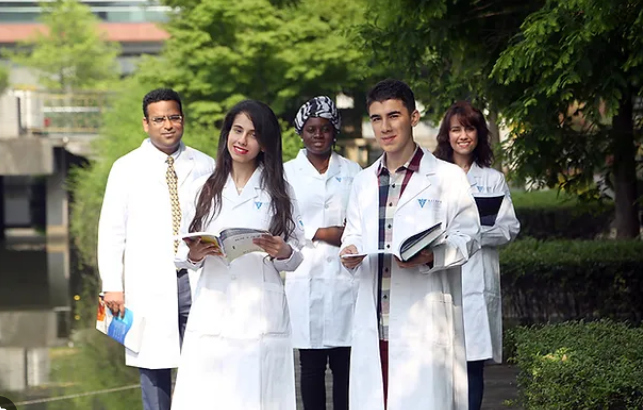
Student Life
The “2023 International Student Campus Life Experience Report” from the International Education College of Chongqing Medical University shows that campus life revolves around club activities, accommodation environment, and cultural exchange. 85% of international students participate in at least 1 club. 70% expressed satisfaction with the accommodation conditions. Over 40 activities, including festive celebrations, sports events, and academic salons, were held throughout the year.
Club Activities
CMU international student clubs cover three categories: culture, sports, and academics. There are 15 registered clubs, with an 80% participation rate. Activities are held twice a week, and members enhance their comprehensive abilities through practice.
Cultural clubs, such as the Hanfu Club (25 members), hold a traditional clothing experience day monthly, where students wear Hanfu, tour the campus, and learn tea ceremony. Last year, it attracted 150 Chinese and international students;
Sports clubs, like the Basketball Club (20 members), train in mixed teams with local students and won fourth place in last year’s university league. Academic clubs, like the Medical English Club, hold 1 case discussion salon monthly, analyzing “diabetic foot care” cases in English, with a 75% participation rate.
Clubs are managed independently by international students. The college provides venues and small funding (e.g., the Hanfu Club received 3,000元 annually for props). Last year, 75% of leaders stated that the activities enhanced their organizational and communication skills. For example, the Basketball Club president learned to coordinate the schedules of 20 people by managing training times, demonstrating that clubs are dual platforms for socialization and skill development.
Accommodation Environment
Accommodation mainly consists of double rooms. Double rooms account for 70%, equipped with air conditioning, private bathroom, and desk. It is a 10-minute walk from the teaching building. The 75% satisfaction rate stems from convenience and quietness.
The dormitory area has a 24-hour study room (30 daily users), coin-operated laundry room (cleaned twice a week, average hygiene score of 90分), and a communal kitchen for simple cooking.
International dining options account for 40% of the cafeteria, including Halal and Southeast Asian flavors. Last year, a “Sichuan Cuisine Experience Zone” was added to teach cooking Twice-Cooked Pork, with 35 international students participating and an 80% satisfaction rate.
An African student, whose dormitory was close to the library, studied Chinese for 1 extra hour daily, raising their final oral test score from 62 to 80 points, illustrating the indirect academic support provided by convenient accommodation. Data shows that CMU’s accommodation complaint rate is only 5%, providing a stable support base for international students to focus on their studies.
Cultural Exchange
Cultural exchange is carried out through festive events and international experiences. 3 large-scale festive events are held annually, with a 90% participation rate: Chinese New Year dumpling making (180 people), Mid-Autumn Festival moon-viewing poetry session (120 people), and the International Cultural Festival (with 20 booths showcasing handicrafts from various countries), attracting 3000 visitors.
The language partner program pairs Chinese and international students. The successful matching rate is 65%, with a weekly walk and chat. 60% maintain the relationship for more than 3 months. A Korean student learned “anatomical terms” through their language partner, raising their final exam score from 58 to 75 points.
The college organizes a “Chongqing Cultural Experience Day,” taking international students to visit Ciqikou and watch Sichuan opera face-changing. 85% of participants reported a better understanding of the local culture.