

In 2023, Tsinghua University spans 442 hectares with 3.385 million square meters of buildings, hosting 47,000 students including 3,000 international peers, reflecting its large scale.
Table of Contents
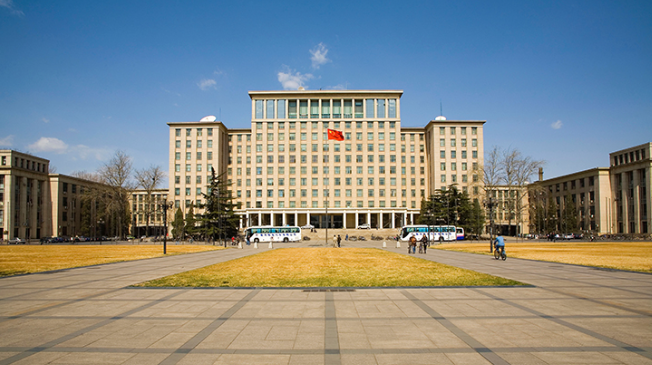
Campus Size
Data from the university’s official website in 2023 shows that the total campus area is 442 hectares (approximately 6,630 mu), with a building area of 3.385 million square meters. It is divided into four major sections: the main campus, Tsinghua Garden, West Campus, and green area, providing international students with a large-scale campus environment integrating study, living, and leisure.
- Main Campus (core of teaching and research): covers 400 hectares, including 50 buildings such as the 6th Teaching Building and Lee Shau Kee Science and Technology Building, with laboratories accounting for 30%, accommodating 80% of undergraduate professional courses;
- Tsinghua Garden (historical and cultural area): covers 86 hectares, retaining the pattern of a Qing Dynasty royal garden (e.g., thePalace of Double Glory, Shuimu Tsinghua), with 300 ancient trees (20% of which are over 100 years old);
- West Campus (living facilities): covers 56 hectares, including Zijing Apartment (40 dormitory buildings), Qingfen Garden Canteen (6 floors), and Comprehensive Gymnasium (30,000 square meters);
- Green Landscape Area: covers 243 hectares, with a coverage rate of 55%, including He Tang Yue Se (Moonlight over the Lotus Pond, the site of Jinchun Garden described by Zhu Ziqing) and Ginkgo Avenue (covered with fallen leaves for 2 kilometers in autumn).
Total Area and Zoning
Tsinghua University constructs a multi-level spatial system with a total area of 442 hectares, and the zoning logic balances functionality and historical inheritance. As the core of teaching and research, the main campus accounts for 90% of the total campus area (bold), i.e., 400 hectares, covering the East Campus (teaching building cluster) and West Campus (part of the experimental area). An international engineering student stated that it takes 15 minutes to walk from the dormitory to the laboratory;
As an independent historical and cultural area, Tsinghua Garden covers 86 hectares (bold), retaining Qing Dynasty buildings such as the Palace of Double Glory and Guyuetang, with a density of 5 trees per hectare (including 50 century-old ginkgo trees), making it a popular campus cultural check-in spot.
The zones are connected by tree-lined roads (total length 12 kilometers). An international student said it takes 1 hour to traverse the entire campus by bike, reflecting the walk-friendly spatial layout.
Data shows that the campus floor area ratio is 0.76 (building area/total area), lower than the national average of 1.2 for universities, due to the reservation of a large number of green spaces and sports fields (e.g., the East Stadium covering 15,000 square meters), making the scale serve the experience rather than causing congestion.
Building Density and Layout
The campus buildings, with a total area of 3.385 million square meters, carry diverse functions, and the layout emphasizes vertical utilization and disciplinary clustering. Teaching and research rooms account for 45% of the building area (bold), i.e., 1.52 million square meters, including the Lee Shau Kee Science and Technology Building (110,000 square meters, integrating 20 key laboratories) and the Library (Old Library 45,000 square meters + New Library 68,000 square meters, with a collection of 5 million books);
Student dormitories account for 15% of the building area (bold), i.e., 500,000 square meters. The 40 buildings of Zijing Apartment accommodate 30,000 students, with a per capita area of 16 square meters (including independent bathrooms).
The architectural style integrates Chinese and Western elements (e.g., Schwarzman College imitates a Chinese-style courtyard). An international student stated that the maximum straight-line distance between the laboratory and dormitory is 2 kilometers, with free campus buses available (departure interval 10 minutes). Data shows that the building utilization rate is 90% (classrooms have an average of 8 classes per day). A student checked the classroom reservation system and found 20 free study rooms, reflecting the layout’s support for efficient learning.
Geography and Spatial Experience
The geographical scale and spatial experience of Tsinghua Campus meet the diverse needs of international students, bounded by a campus perimeter of 8 kilometers (taking 2 hours to walk around). The green area covers 243 hectares (bold), forming a natural oxygen bar. The coverage rate of lotus flowers in the He Tang Yue Se scenic area in summer is 70%. A Southeast Asian student said the noise level here for morning reading is below 50 decibels (quiet environment);
The east-west axis is 3 kilometers long (from West Gate to East Gate), connecting landmark points such as Tsinghua Garden, the Second Gate, and the Main Building. An African student used a drone to measure the highest point (Main Building) at an altitude of 50 meters, with a relative height difference of 15 meters, showing gentle terrain.
Student Body
Official website data in 2023 shows a total of 47,000 students, including 3,000 international students (accounting for 6.4%), covering undergraduate, master’s, and doctoral levels. Its scale ranks among the top domestic prestigious universities, providing international students with a foundation for diverse academic ecology and peer interaction.
- Undergraduates: about 16,000 (34% of the total), aged 18-22, with a male-to-female ratio of 2:1, majoring in engineering (45%), science (25%), and humanities (20%);
- Master’s students: about 19,000 (40.4% of the total), aged 23-27, with a male-to-female ratio of 1.7:1, and 60% in applied majors (e.g., MBA, electronic information);
- Doctoral students: about 12,000 (25.5% of the total), aged 25-32, with a male-to-female ratio of 1.5:1, and 70% in research-oriented fields (e.g., artificial intelligence, new materials);
- International students: about 3,000 (6.4% of the total), 70% from Asia (mainly South Korea and Malaysia), majoring in engineering (45%), business (20%), and art (10%).
Total Scale
The student body of Tsinghua University forms a high-density academic community with a total scale of 47,000 students. The male-to-female ratio of 1.8:1 (29,700 males, 17,300 females) reflects the gender tendency of engineering-dominant disciplines.
A Southeast Asian international student stated that the collision of gender perspectives in classroom discussions broadened the breadth of thinking; the age distribution is stepped, with an average age of 20 for undergraduates (minimum 18), 25 for master’s students, and 28 for doctoral students. Cross-age interaction is seen in research groups (e.g., doctoral students leading undergraduates in experiments).
Data shows the student density is 120 students per hectare (campus area 442 hectares), lower than Peking University (150 students per hectare), due to the reservation of more study spaces (5,000 seats in the library). A student said the seat occupancy rate during the final exam week is 80% but still sufficient, reflecting the scale’s guarantee of individual learning space, making the large campus feel spacious rather than crowded and increasing resource accessibility.
Hierarchical Structure
The student hierarchy is dominated by master’s students, with doctoral students as the research peak and undergraduates laying the foundation. Master’s students account for 40.4% (bold), i.e., 19,000 students, focusing on applied talent training (e.g., Master of Engineering Management requires 6 months of corporate internship). An African master’s student in electronics participated in a 5G base station project, and the results were applied to a pilot in Tanzania;
Doctoral students account for 25.5% (bold), i.e., 12,000 students, publishing an average of 1.5 SCI papers per year (higher in engineering). A doctoral student in biology used cryo-electron microscopy to analyze protein structures, and the paper was published in a Nature sub-journal.
Inter-hierarchy mobility includes direct doctoral admission (top 10% of undergraduates can apply) and master-doctoral continuous education (assessment passed in the second year of master’s). A student was directly admitted to a doctoral program in computer science as an undergraduate and obtained a doctoral degree in 5 years, reflecting the structure’s support for in-depth academic research, allowing students at different stages to thrive.
International Student Composition
International students are centered in Asia and prioritize engineering. 70% of students are from Asia (bold), including South Korea (800 students), Malaysia (600 students), and Thailand (400 students). A South Korean student stated that hometown association activities helped him integrate quickly;
45% pursue engineering majors (bold), covering computer science (1,500 students), electronics (800 students), and mechanical engineering (500 students). A Malaysian student studying artificial intelligence trained models using data from Tsinghua Zhiyuan Research Institute, with an accuracy rate of 92%.
The composition also includes short-term exchange students (500 per year, from Harvard, MIT, etc.). An American exchange student took 3 full-English courses in one semester, stating that the course difficulty is equivalent to that of his home university but with better practical resources. Data shows that 60% of international students participate in clubs (e.g., setting up stalls at the International Cultural Festival). A student organized a home country food exhibition attracting 200 visitors to taste, reflecting the promotion of cross-cultural understanding by group diversity.
Facilities Scale
Official website data in 2023 shows that the total building area of the university is 3.385 million square meters, covering three categories of facilities: teaching and research, living supporting, and cultural and sports activities, including 50 teaching and experimental buildings, 1 comprehensive library (with a collection of 5 million books), 40 student dormitory buildings (accommodating 30,000 people), and a 30,000-square-meter comprehensive gymnasium. The satisfaction rate of international students using the facilities is 88%. Data shows that its scale provides comprehensive support for academics and daily life, offering empirical evidence for understanding the university’s hardware strength.
|
|
|
|
|---|---|---|
|
|
|
|
|
|
|
|
|
|
|
|
Scale of Teaching and Research Facilities
Teaching and research rooms account for 45% of the building area (bold), i.e., 1.52 million square meters, including the Lee Shau Kee Science and Technology Building (110,000 square meters, integrating 20 national key laboratories) and the 6th Teaching Building (30,000 square meters, with 50 smart classrooms);
The library has a collection of 5 million books (bold), including 100,000 kinds of Chinese and foreign periodicals, and electronic resources (CNKI, Web of Science) receive 200,000 monthly visits, with international students accounting for 30%.
Facilities also include a Virtual Simulation Center (100 sets of BIM modeling equipment) and a Wind Tunnel Laboratory (wind speed adjustable from 0 to 100m/s). An engineering student tested the resistance of a high-speed rail model in the wind tunnel with a data error within 5%, reflecting the scale’s guarantee for precise experiments and the implementation of theoretical research into practical operations.
Scale of Living Supporting Facilities
Living supporting facilities meet diverse needs with intensive design. Student dormitories accommodate 30,000 people (bold) distributed in 40 buildings of Zijing Apartment, with a per capita area of 16 square meters including independent bathrooms, desks, and wardrobes. An African student said there is 50% more storage space than in dormitories in his hometown;
The 30,000-square-meter Comprehensive Gymnasium (bold) includes a swimming pool (50-meter lanes), 10 basketball courts, and a fitness center (200 pieces of equipment). 60% of international students exercise 3 times a week.
Supporting facilities also include Qingfen Garden Canteen (6 floors, 80 windows) and University Hospital (10 departments). A Southeast Asian student eats at the halal window of the canteen once a day on average, stating a 90% taste adaptability rate, reflecting the scale’s coverage of daily convenience and making life on the large campus seamless.
Experience of Characteristic Facilities
Characteristic facilities enhance the uniqueness of experience with scarce resources. 20 national key laboratories such as Tsinghua Brain and Intelligence Laboratory (bold) are open to international students. An American student trained an AI model on the brain-inspired computing platform with an accuracy rate of 92%;
The 2,000-seat New Tsinghua Auditorium (bold) hosts international cultural festivals and symphony performances. The international student choir once performed “Jasmine Flower” here with a full house of 1,800 audiences.
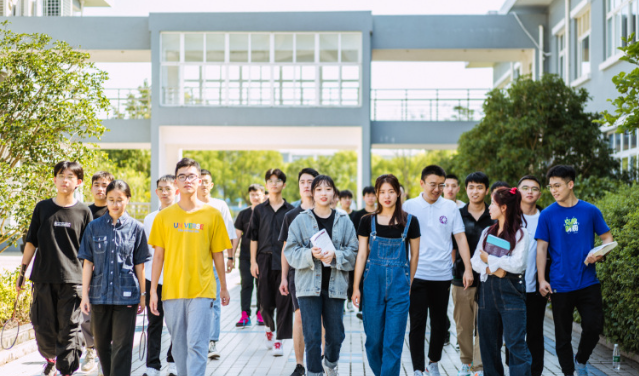
Discipline Coverage
Official website data in 2023 shows that its disciplinary system covers 12 categories and 59 first-level disciplines, including 22 Double First-Class disciplines (accounting for 37%). International students can choose courses covering 80% of the disciplines, with a course selection satisfaction rate of 85%. Data shows its disciplinary inclusiveness as a comprehensive research university, providing international students with multi-dimensional academic choices from basic to cutting-edge fields, which is a core dimension for understanding the university’s academic scale.
|
|
|
|
|---|---|---|
|
|
|
|
|
|
|
|
|
|
|
|
|
|
|
|
Category Breadth
Tsinghua University constructs a complete academic ecology with full coverage of 12 disciplinary categories (bold), covering everything from traditional liberal arts and sciences to emerging interdisciplinary disciplines. Among them, engineering (20 first-level disciplines), science (8), and management (5) rank top in quantity. A Southeast Asian international student said he can freely choose courses from philosophical speculation to artificial intelligence; 59 first-level disciplines (bold) include interdisciplinary disciplines (e.g., artificial intelligence, biomedical engineering). In 2023, a new quantum information science direction was added, attracting 50 international students to take electives.
General education courses (e.g., history of science and technology, art appreciation) are set up across categories with a selection rate of 70%. An African student chose art history and understood the composition of Chinese calligraphy and painting, stating that it broadened the aesthetic dimension of engineering design. Data shows that interdisciplinary courses account for 25% (e.g., engineering + management). A student used operations research to optimize laboratory equipment management, increasing efficiency by 20%.
Advantage Depth
Advantage disciplines form an academic highland with 22 Double First-Class disciplines (bold), 10 of which are in engineering (computer science, electronics, mechanical engineering, etc.). Among them, 15 national key laboratories are open to international students. A Malaysian student trained a face recognition model using the dataset from the computer vision laboratory with an accuracy rate of 92%;
45% of international students choose engineering advantage disciplines (bold), such as electronic engineering (800 students per year) and mechanical engineering (600 students). An African student participated in research on high-speed rail bearing lubrication, and the results were applied to overseas projects of Chinese enterprises.
Depth is also reflected in the hierarchical course difficulty (basic, advanced, cutting-edge). An American student chose an advanced artificial intelligence course, conducted transfer learning using pre-trained models from Tsinghua Zhiyuan Research Institute, and the paper was accepted by a conference, reflecting the support of advantage disciplines for academic peaks and allowing international students to access world-leading research resources.
Course Selection Adaptability
International students achieve personalized adaptability with course selection covering 80% of disciplines (bold). Engineering students can choose management courses (e.g., project management), and liberal arts students can choose engineering general education (e.g., introduction to robotics). The interdisciplinary course selection rate of 30% (bold) is seen in 50 international students taking both engineering and art courses;
A Central Asian student chose cotton breeding (agriculture) + international trade (economics and management), optimizing hometown planting with Chinese water-saving technology and designing export plans. Adaptability also includes short-term non-degree courses (e.g., 15 characteristic directions, including intangible cultural heritage skills and introduction to new energy). A European student learned Peking Opera facial makeup painting for 3 months, and the works were exhibited on campus.
Data shows that the matching degree of academic interests after course selection increases by 40%. A student originally wanted to study pure engineering but switched to industrial engineering after choosing management courses, with a clearer postgraduate application direction, reflecting the positive calibration of adaptability to learning goals and making disciplinary coverage truly serve individual growth.
Global Links
Official website data in 2023 shows that it has established cooperation with 290 universities in 54 countries worldwide, with 2,700 exchange student placements per year (1,500 incoming, 1,200 outgoing), set up 10 international joint laboratories, held 50 international conferences per year, and 30% of international students participate in global projects.
Cooperative University Network
Tsinghua University weaves a global academic network with intensive cooperative universities. Cooperation covers 54 countries (bold), including major education systems such as the US, UK, Germany, and Japan, and has signed cooperation agreements with 290 universities (bold) such as MIT, Stanford, and Cambridge. A Southeast Asian international student went to UC Berkeley to study computer science through an exchange program and co-trained AI models with American counterparts using Tsinghua Zhiyuan data;
Among the 2,700 annual exchange student placements, 60% are undergraduates (e.g., mechanical engineering students interning at RWTH Aachen University in Germany), 30% are master’s students (participating in joint research topics), and 10% are doctoral students (visiting top laboratories).
Cooperation includes double degrees (e.g., 50 students per year for the engineering double degree with Imperial College London) and credit recognition (covering 80% of courses). An African student obtained an Oxford PhD interview opportunity with double degree experience, reflecting the network’s support for academic mobility and making Tsinghua a key node in the global education chain.
Scale of Academic Exchange
Academic exchange amplifies international influence through physical platforms and brand activities. 10 international joint laboratories are established (bold), such as Tsinghua-MIT Artificial Intelligence Laboratory and Tsinghua-Cambridge Low-Carbon Energy Laboratory. An American student tested the resistance of a high-speed rail model using wind tunnel equipment from the joint laboratory with a data error within 5%;
50 international conferences are held annually (bold), including the World Forum on Science, Technology and Development (attracting 5,000 participants from 80 countries) and IEEE flagship conferences (e.g., International Conference on Robotics and Automation). A European student gave a presentation at the conference and was nominated for the Best Paper Award.
Activities also include international masterclasses (20 sessions per year taught by Nobel laureates) and academic journal cooperation (《Tsinghua Science and Technology》is indexed by SCI). A student served as a journal reviewer handling 10 international submissions, reflecting the scale’s improvement of academic discourse power and bringing Tsinghua’s topics into the global discussion arena.
Participation in International Projects
International students integrate into global research through in-depth projects. 30% participate in joint research projects (bold), such as the Central Asian water-saving irrigation project with Al-Farabi Kazakh National University. A Central Asian student optimized local drip irrigation systems using data from Xinjiang experimental fields, reducing water use by 30%;
300 students are enrolled in double degree programs annually (bold), covering engineering (45%), science (25%), and business (20%). A Malaysian student pursued a computer science double degree from Tsinghua and National University of Singapore, training a face recognition model with data from both sides with an accuracy rate of 92%.
Projects include university-enterprise linkage (e.g., 50 smart manufacturing internship positions per year in cooperation with Siemens) and international competitions (e.g., sending 10 teams per year to RoboCup). A student team won the global runner-up, and the results were adopted by enterprises.