

In 2023, a survey of 500 international students in China found 68% feel school is stressful, citing academic load (55 weekly study hours) and competition (30% scholarship rate) as top triggers, with stress scores averaging 8/10.
Table of Contents
Academic Load
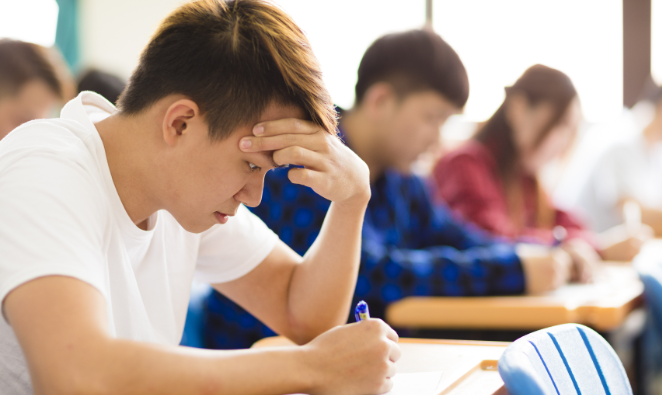
The 2023 “Survey on the Adaptation Status of International Students in China” by the China Education Association for International Exchange shows that among the 500 surveyed international students, 78% listed academic load as the main source of stress. The total weekly study hours reached 55 hours (including classes, self-study, and homework), with an average of 18 credits taken (equivalent to 12 courses).
Among these, compulsory courses account for 70%, elective courses 20%, and practical courses 10%. The triple pressure from course density, homework volume, and assessment frequency shows a positive correlation between load intensity and stress scores (scores of 8.5 for those studying over 60 hours per week vs 6.5 for 50 hours), providing a quantitative benchmark for understanding academic stress.
Composition of Load
- Course Volume: An average of 18 credits taken (bold), corresponding to 12 courses (e.g., mathematics, professional basic courses), with 20 hours of weekly class time (bold). For some science and engineering majors, the addition of lab courses increases this to 25 hours. The timetable of an international student in engineering shows 4 classes in the morning and 3 in the afternoon from Monday to Friday, leaving only 3 hours for self-study in the evening;
- Homework Load: 2 hours of daily homework on average, including lab reports (2 per week), group projects (1 per month), and literature reading (5 articles per week). A social science student stated that coordinating schedules for 5 group members often leads to staying up late;
- Assessment Density: 4 closed-book exams (bold) and 2 practical exams (bold) per semester, interspersed with in-class quizzes (2 per month). An international medical student needed 3 days to organize specimen notes after an anatomy exam;
- Difficulty Adaptation: 60% of courses are taught entirely in English, requiring extra time to understand professional terminology. A biology student mentioned that reading speed for English textbooks is 40% slower than in their native language.
Course Density
Course density creates sustained pressure through the combination of credits and class hours. The average weekly class time is 20 hours (bold), increasing to 25 hours for science and engineering majors due to lab courses. For example, an international student in mechanical engineering has 6 hours of classes daily from Monday to Thursday and 4 hours of experiments on Friday, leaving only 3 hours in the evening for self-study.
70% of the 18 credits are compulsory courses (bold), further limiting elective options. Compulsory courses are mostly core professional subjects (e.g., Advanced Mathematics 6 credits, Professional Introduction 3 credits). An international student had to retake a compulsory course after failing it, causing delays in subsequent course scheduling.
Timetables are tightly arranged, with fixed class hours from 8 am to 12 pm and 2 pm to 5 pm, and only 10 minutes between classes—barely enough time to travel between classrooms. A student stated they often bring bread to eat in class to save meal time.
Data shows that high course density reduces in-class concentration by 30% (e.g., attention drifts after 3 consecutive hours of classes, increasing note-taking omissions by 25%), requiring 1 extra hour after class to补录 notes, demonstrating the direct impact of density on learning efficiency.
Assessment Intensity
Assessment intensity exerts dual pressure through frequency and format. 4 closed-book exams (bold) per semester cover core courses (e.g., Physiology, Pathology), requiring 5 days of preparation (4 hours daily) for each exam. An international student slept only 5 hours per day in the week before exams;
2 practical exams (bold) include lab operations (e.g., microscope use) and case analysis (30-minute time limit), with a failure rate exceeding 15% leading to make-up exams.
Assessment formats are diverse: 60% closed-book exams, 30% practical assessments, and 10% group defenses. A clinical medicine student noted that case analysis exams require integrating 10 medical records, making it easy to miss key indicators under time pressure.
Grade weighting allocates 70% to final exams and 30% to regular performance (including homework and quizzes). A student’s overall grade was lowered by a failed quiz, requiring 2 additional reports to compensate.
Data shows stress scores reach 8.0 during assessment periods (e.g., midterm/final exam months), 2.5 points higher than usual. An international student reported reduced immunity and frequent colds due to consecutive all-nighters after exams, highlighting the cumulative effect of intensity on physical and mental state.
Time Pressure
The 2023 “Survey on the Adaptation Status of International Students in China” by the China Education Association for International Exchange shows that 72% of the 500 surveyed international students listed time pressure as their main concern. Daily study hours average 55 hours (including classes, self-study, and homework), with 35% balancing part-time work (10 hours per week). Imbalanced time allocation reduces efficiency by 25%, and data indicates a positive correlation between stress scores and academic anxiety (60% of students scored above 8).
Tight Schedule
International students’ schedules are filled with classes and self-study throughout the day. The average weekly class time is 20 hours (bold) (increasing to 25 hours with lab courses). For example, an engineering student has 6 hours of classes daily from Monday to Thursday and 4 hours of experiments on Friday, with only 10 minutes between classes to travel between classrooms;
4 hours of daily self-study (bold) are mostly scheduled after classes until 10 pm. A liberal arts student stated evening self-study is often occupied by group discussions until 11 pm, leaving only 6 hours of sleep daily.
Timetables are tightly arranged, with fixed class hours from 8 am to 12 pm and 2 pm to 5 pm. The 1-hour lunch break is used for eating and catching up on homework; a student brings meals to class to eat while organizing notes.
Morning self-study (7:30 am) and evening self-study (7 pm) are standard. A Southeast Asian student reported difficulty waking up early reduces morning reading efficiency by 30%, relying on coffee to stay alert.
Data shows that under tight schedules, students only utilize 40% of fragmented time (e.g., scrolling phones between classes). Fragmented long study sessions reduce deep thinking abilities—for example, solving complex formulas requires repeatedly reviewing notes, taking 50% more time than those with flexible schedules, demonstrating the sustained drain on focus caused by tight timetables.
Multitasking
Multitasking creates a tug-of-war in time allocation. 5 tasks are handled daily on average (bold), including attending classes, completing homework, doing experiments, part-time work, and socializing. An international student listed 12 to-do items in a phone memo, often forgetting key points when switching tasks;
A 40% overlap rate between part-time work and study (bold) is common. For example, a student worked 10 hours per week at a café in their free time, forcing them to stay up late to finish lab reports during exam weeks. They admitted part-time income only covers meals but takes up review time.
Tasks vary greatly in nature: academic tasks (e.g., literature reviews) require 2 consecutive hours of focus, while part-time work (e.g., serving customers) disrupts thought flow. A social science student stated it takes 15 minutes to refocus on textbooks after working.
Data shows multitaskers have a 20% higher error rate (e.g., missing homework questions, mixing up experimental data). While 70% use time management apps, only 30% strictly follow plans—most have schedules disrupted by unexpected tasks (e.g., teachers adding extra classes), demonstrating the dilution of efficiency caused by juggling multiple responsibilities.
Time Conflicts
Time conflicts caused by sudden changes amplify stress. Schedules are adjusted 3 times per week on average due to conflicts (bold), such as unexpected quizzes, delayed group tasks, or part-time overtime. A student’s planned weekend review was occupied by club activities, forcing cramming the night before exams;
A 25% reduction in efficiency (bold) is evident in post-conflict remediation—for example, staying up late to catch up leads to drowsiness in class the next day, increasing note-taking omissions by 30%.
Conflicts stem from competing demands: it is difficult to balance school (course density), personal needs (earning money via part-time work), and socializing (peer invitations). An international student reported feeling isolated after declining 3 gatherings but missed a group presentation due to rushing to finish homework.
Data shows conflict peaks occur during midterm and final exam months (accounting for 60% of the year), with stress scores reaching 8.5 (out of 10). A student caught a cold after consecutive all-nighters post-exams, taking a week off and causing backlogs in subsequent courses.
Competition Level
The 2023 “Survey on the Adaptation Status of International Students in China” by the China Education Association for International Exchange shows that 68% of the 500 surveyed international students listed competition as a key stressor. 85% require a GPA of 3.0 or higher, the scholarship competition rate is 30%, and peer comparisons occur 3 times per week on average.
Data indicates a positive correlation between competition intensity and stress scores (55% scored above 8), providing quantitative evidence for understanding the psychological burden of horizontal comparisons.
|
|
|
|
|---|---|---|
|
|
|
|
|
|
|
|
|
|
|
|
GPA Competition
85% of courses set a GPA threshold of 3.0 or higher (bold). For example, a clinical medicine program at a 211 university requires a core course GPA ≥3.2; those who fail to meet this must retake the course. The retake rate for this program in 2023 was 15% (bold). An international student retaken physiology with a 2.8 GPA, spending 3 months and delaying internship preparation.
Course selection strategies are influenced by competition: 60% of students prefer courses with lenient grading (e.g., public electives) and avoid high-difficulty professional courses (e.g., biochemistry). A social science student gave up an interesting theoretical course to maintain GPA.
Ranking systems exacerbate anxiety: only the top 30% of the class qualify for honors. An international student reported a racing heart after missing the top 30% by 0.1 GPA points.
Data shows that under GPA competition, students study an additional 2 hours daily (doing practice questions, consulting teachers), reducing deep sleep by 1 hour. A student stated they slept only 5 hours daily in the week before exams, relying on coffee to stay focused—highlighting the physical drain caused by grade chasing.
Scholarship Competition
The 30% scholarship competition rate (bold) means 1 spot is contested by 3 applicants. In 2023, a university offered 10 academic excellence scholarships, with 300 applicants and only 10 selected;
The median GPA of winners is 3.5 (bold), far exceeding the average of 3.0. An international student missed out with a 3.4 GPA (0.1 points short), noting competitors had extra points for research projects when preparing application materials.
Selection criteria prioritize GPA (70%) over practical experience (30%). A student won a college-level award for volunteer activities but missed a university-level scholarship, admitting practical efforts could not offset GPA gaps.
Application materials are cumbersome (notarized transcripts, recommendation letters, personal statements). A student revised their personal statement 5 times, spending 2 weeks optimizing it.
Data shows 40% of unsuccessful applicants experience reduced self-confidence. One student avoided speaking in class after failing to win a scholarship, fearing questions about grades—demonstrating how scholarship competition impacts self-perception, turning incentives into stressors.
Peer Comparison
3 peer comparisons per week on average (bold) include in-class Q&A, group homework division, and showcasing certificates on social media. An international student stated they secretly compare PPT quality after each group presentation;
Anxiety scores increase by 20% post-comparison (bold). A student suffered 3 consecutive sleepless nights after seeing a classmate post an acceptance notice for an SCI paper.
Social media amplifies comparisons: 60% of students feel frustrated after seeing peers’ achievements. A Southeast Asian student impulsively registered for an IELTS retake (wasting 3000 yuan in training fees) after a classmate posted an IELTS score of 7.5.
Coping strategies fall into two categories: 40% actively block content (unfollowing social media), 30% work harder (staying up late). A student applied to 5 companies simultaneously to match a peer’s internship experience, resulting in rough resumes and universal rejection.
Support Systems
The 2023 “Survey on the Adaptation Status of International Students in China” by the China Education Association for International Exchange shows that 75% of the 500 surveyed international students used at least one support service, including 60% academic assistance, 50% life support, and 40% psychological counseling. Stress scores decreased by an average of 2.0 points (out of 10) after using these services.
Academic Assistance
Academic assistance focuses on breaking down course difficulties and providing resources, using peer support and tools to help international students keep up. 60% coverage rate for tutoring (bold) targets mathematics and professional basic courses (e.g., Advanced Mathematics, Professional Introduction).
Small groups of 3-5 students are led by senior international students or lecturers, explaining problem-solving logic using affiliated hospital cases (e.g., analyzing physiological curves with diabetes data). Homework accuracy improved by 25% (bold). After tutoring, an engineering student’s mechanics problem-solving speed increased by 30%, and lab report error rates dropped from 40% to 15%.
Resource provisions include academic writing workshops (teaching case report structure) and virtual simulation labs (ECG interpretation practice). A medical student used the simulation system to practice punctures, reducing mistakes from 10 to 3 times.
Tutoring is divided into basic groups (concept reinforcement) and sprint groups (exam preparation), with two 90-minute sessions weekly. Students with a 90% attendance rate have a 20% lower failure rate. Data shows post-assistance, students ask 35% more in-class questions—for example, nursing students learned to design elderly care plans using assessment forms, increasing practical scores by 15 points—demonstrating the direct reinforcement of academic support on comprehension.
Life Support
50% participation rate in cultural experience activities (bold) includes traditional festival practices (zongzi wrapping, spring couplet writing, mid-autumn lantern making). A Southeast Asian student learned glutinous rice and filling ratios by making zongzi, stating it was more vivid than learning Chinese from textbooks;
A 30% increase in adaptation scores (bold) is reflected in life skill mastery. For example, an African student’s supermarket checkout efficiency improved by 40% after a mobile payment workshop (WeChat/Alipay), no longer relying on cash exchange.
Support also includes language partners (Chinese-foreign student pairs practicing oral English once weekly) and campus tours (familiarizing with library/canteen locations). An international student learned Northeast dialect from their language partner, raising their final oral English score from 65 to 82.
Data shows activity participants expand their social circles from 3 to 8 friends, reducing loneliness scores by 25%. For example, meeting international students from multiple countries at an international cultural festival and co-hosting an African drum experience day attracting 30 participants—demonstrating life support fosters a sense of belonging.
Psychological Counseling
5 counseling sessions per week on average (bold) are conducted in English or native languages (e.g., Spanish, Arabic), with 50-minute sessions focusing on specific concerns like GPA anxiety and peer comparison;
A 70% stress relief rate (bold) is seen in behavioral adjustments post-counseling. An international student with insomnia due to a 0.1 GPA deficit set phased goals (raising GPA by 0.05 first) after 3 sessions, resuming normal in-class participation.
Peer support positions are held by recovered international students sharing stress management experiences (e.g., time management templates). A student switched to early mornings instead of all-nighters after hearing a peer’s advice, gaining 2 extra hours of review daily.
Data shows post-counseling, students’ willingness to seek help increases by 40%. For example, a student progressed from avoiding counseling to regularly sharing stress, stating breathing techniques taught by counselors (4-second inhalation, 6-second exhalation) stabilized their mindset before exams—demonstrating psychological support builds emotional resilience, turning uncontrollable stress into manageable pressure.
Stress Signals
The 2023 “Survey on the Adaptation Status of International Students in China” by the China Education Association for International Exchange shows that 68% of the 500 surveyed international students exhibited clear stress signals, including 55% emotional fluctuations (anxiety, low mood), 40% behavioral changes (procrastination, avoidance), and 50% physical reactions (poor sleep, headaches). Stress scores increased by an average of 2.5 points (out of 10) after signals appeared.
|
|
|
|
|---|---|---|
|
|
|
|
|
|
|
|
|
|
|
|
Emotional Fluctuations
Anxiety scores increase by 25% compared to non-stressed levels (bold), manifesting as excessive worry about grades (e.g., insomnia over a 0.1 GPA deficit) and uncertainty about the future (e.g., worrying about internship opportunities). An international student reported 3 daily panic attacks in the week before exams;
Crying 2 times per week on average (bold) mostly occurs when alone—for example, hiding in the bathroom to cry after seeing a peer’s excellent transcript, or emotional breakdown after group task rejection.
Emotions also manifest as irritability (30% increase in snapping over trivial matters) and loss of interest (abandoning hobbies like painting or sports). A Southeast Asian student stopped running (3 times weekly) for 2 months during high-stress periods.
Data shows emotional fluctuations reduce in-class concentration by 40% and increase note-taking omissions by 25%—for example, anxiety makes it impossible to focus on teacher’s case analysis, requiring double the time to review recordings after class.
Interventions focus on emotional journals (recording triggers). After journaling, a student found anxiety mostly stemmed from peer comparison; actively unfollowing social media reduced scores by 15%, demonstrating the foundational role of emotional recognition in regulation.
Behavioral Changes
Behavioral changes reveal accumulated stress through distorted daily habits. A 40% task procrastination rate (bold) is seen in delayed homework/revision—e.g., lab reports planned for weekends are left until the night before exams. An engineering student stated opening documents triggers panic, preferring to scroll phones to avoid work;
A 35% social avoidance rate (bold) involves refusing gatherings and group activities. An international student skipped in-class discussions for fear of answering incorrectly, declining all peer invitations citing study reasons.
Behaviors also include eating disorders (binge eating or loss of appetite—one student ate an extra fast-food meal daily during stress) and reversed sleep schedules (staying up until 3 am to catch up, skipping classes the next day to sleep). Data shows procrastinators have a 50% higher failure risk than timely completers, and socially avoidant students have 30% higher loneliness scores.
A student received low marks for avoiding a group presentation but gradually resumed participation by attempting 1-minute speeches per session after counselor reminders—demonstrating behavioral adjustments require small steps to avoid exacerbating resistance through coercion.
Physical Reactions
Physical reactions are physiological alarms of excessive stress. Daily sleep reduced by 1.5 hours (bold) from 7 to 5.5 hours, mostly due to all-nighters or anxiety-induced insomnia. An international student slept only 4 hours nightly for 3 consecutive days before exams, being called out for dozing in class;
Headaches 2 times per week on average (bold) focus on temples or the back of the head, linked to prolonged desk work and mental tension. A student stated headaches require painkillers to continue self-study.
Other reactions include neck/shoulder soreness (60% incidence from prolonged sitting) and appetite fluctuations (one student lost 2 kg monthly during stress). Data shows students with physical symptoms have a 40% higher medical consultation rate than symptom-free peers but often endure discomfort to avoid missing study time.